HEART Project · Hue High-Tech Park
AI Data Center & Robotics Infrastructure Platform
A 1,081 ha national-grade high-tech park in Hue City, Central Vietnam — anchored on a 1,000 MW-class AI data center campus and secured across five pillars: power on a 22→110→500 kV ladder, with the newly planned nearby 500 kV substation being moved inside the park under the PDP-8 amendment; cooling water of potable-source quality from a national-security hydropower dam ~5 km away, built and operating to the 1/1,000-year-flood first-class standard; connectivity from Viettel and VNPT at RTT ≤ 25 ms with two submarine landing points each; land on 50-year PPP-BOT and high-tech green-lane tenure; and talent — 1,000+ PhD-level professionals resident in the Hue–Da Nang semiconductor belt.
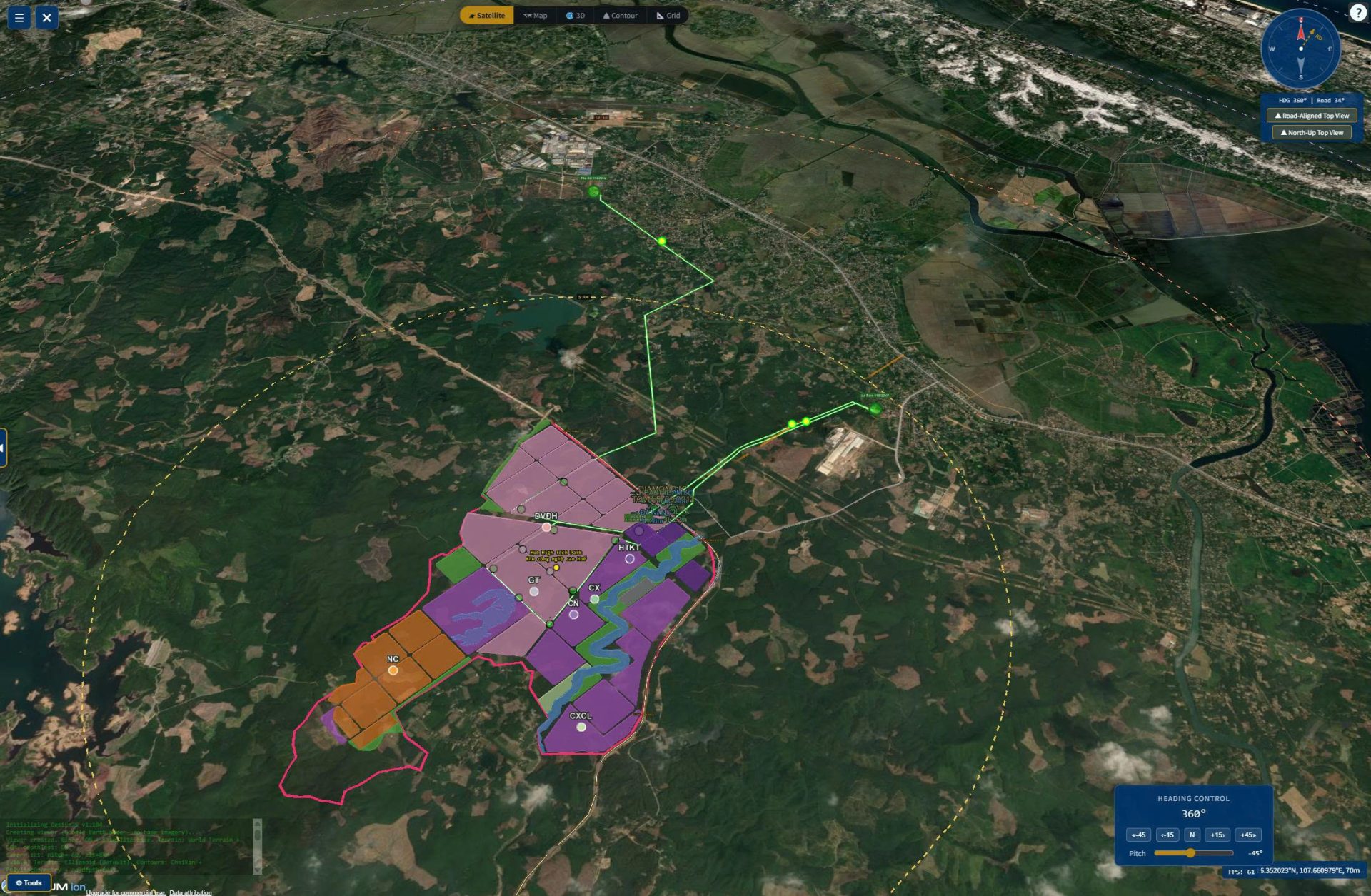
◉ Open the 3D Zone SimulatorInteractive land-use model — PK-1 to PK-5 on the actual terrain ↗- Document No.
- HEART-ALL-CON-BRF-001-RevD
- Revision
- Rev.D — adds §17 AI DC Investor Incentives
- Issue Date
- 30 September 2026
- Language
- English (controlling)
- Prepared by
- HEART High-Tech Joint Stock Company (HEART HT)
- Prepared for
- Prospective Delivery Partner — named recipient
- Basis of issue
- Executed Non-Disclosure Agreement
- Classification
- Strictly Confidential — named recipients only
- Distribution
- No onward distribution, reproduction or extraction
- Status
- For discussion — not a contractual document
01Executive Summary
The HEART Project is the development of the Hue High-Tech Park (Khu Cong nghe cao Thanh pho Hue) — a 1,081 ha multi-sector, open-format high-tech park in which a large-scale AI data center is the core infrastructure asset, not an ancillary component. This is the first master plan of its kind in Vietnam. This document is an infrastructure-focused introduction prepared for a prospective delivery partner following execution of the NDA.

1.1 What the project is
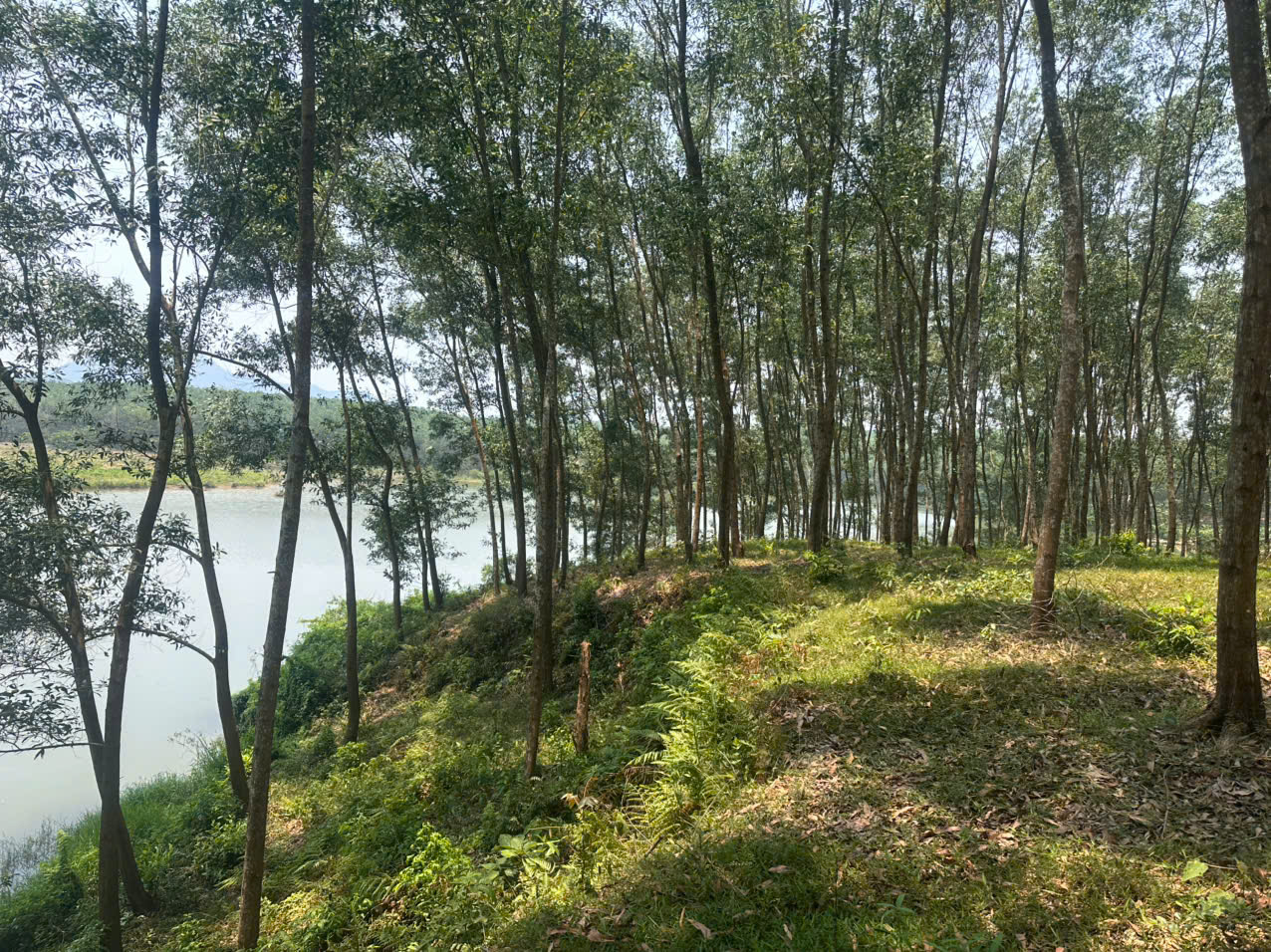
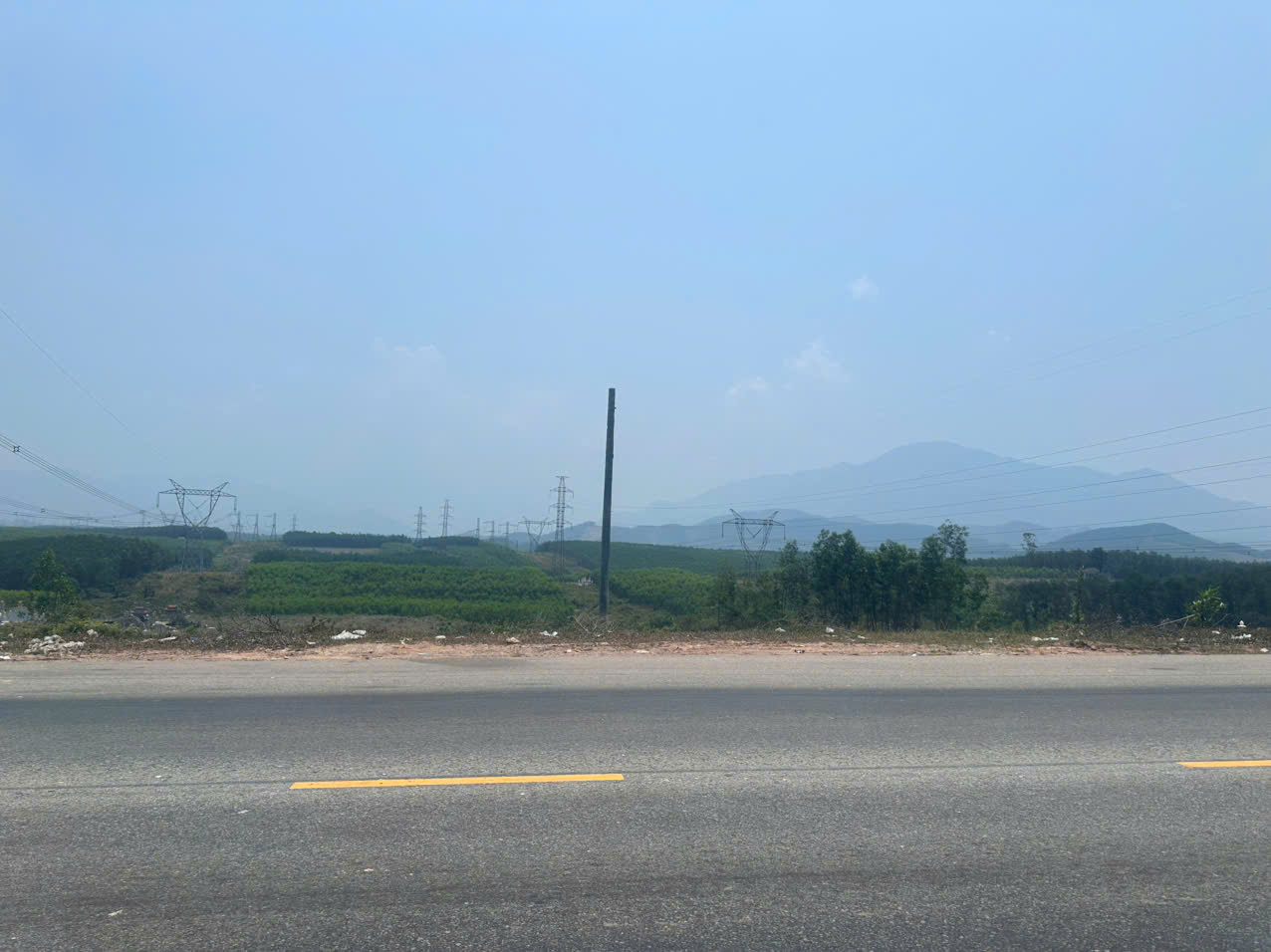
- Location. Hung Loc Commune, Hue City, Central Vietnam — centroid 16.31441°N, 107.697017°E (WGS84); 4.29 km (E–W) × 5.38 km (N–S). Bounded north and east by the Cam Lo – La Son Expressway.
- Statutory basis. Established under High Technology Law No. 133/2025/QH15 and Government Decree No. 260/2026/ND-CP dated 30 June 2026 (Articles 18, 19 and 20 governing the orientation, conditions and procedure for establishing a high-tech park).
- Structure. Five functional zones (PK-1 to PK-5) plus protective green buffer and road reserve. PK-2 — the AI data center zone — is the single largest zone at 319.52 ha (29.56%). The data center is foundational AI-training and high-performance-compute infrastructure, not a storage-type facility (Report 25/2026).
- Power. Ultimate envelope ~1,550 MW: approximately 1,000 MW AI data center load and 550 MW high-tech manufacturing, R&D and utilities. Delivery per the filed roadmap (Report 25/2026) — Phase 1.1 takes 40 MW from two independent 110 kV sources over the 22 kV grid, the following phase moves to 110–220 kV, and post-2030 the park connects at 500 kV through two in-project 500/220/110 kV substations of 2 × 900 MVA each, with ~300 m tie-lines lying entirely inside the site boundary. Should State and city objectives allow an earlier start, the Investor intends to accelerate this roadmap — the commitment package in §20.2 is engineered for early expansion. See §7–§8.
- Water. 13,000 m³/day in Phase 1, rising to 100,000 m³/day in Phase 2, drawn from the Ta Trach reservoir under an existing surface-water licence and a project-specific written confirmation, with Truoi reservoir on an independent catchment as backup.
- Flood safety — designed for the 1-in-1,000-year flood. The drainage and earthworks concept is engineered against an extreme flood of 1/1,000-year return period (drawing HHFP-P1-RWS-003), and an absolute zero-inundation performance guarantee for the data center platform is fixed as one of the project’s core technical conditions (§13.2, §18.4). The guarantee rests on four engineered layers: the flood-relief canal network, fully controlled cooling-water flow routing, the upstream Ta Trach dam — built to hydropower-dam design standards, a fundamentally higher structural class than ordinary irrigation reservoirs — and professional dam operation by the dedicated state-owned Ta Trach operator. 79.5% of the site already sits in the 5–30 m elevation band, well above regional flood levels.
- Connectivity. Designed to TIA-942-C Rated-4: two independent submarine cable systems via separate landing stations (APG at Da Nang, SJC2 at Quy Nhon), diverse domestic routes from two carriers, a terrestrial Vietnam–Singapore route, and a carrier-neutral Meet-Me Room.
- Delivery. Trunk infrastructure is to be procured as a PPP project under a 25–30 year BOT contract using no state capital, via the investor-appointment route under the PPP Law.
1.2 Why the site works for heavy digital infrastructure
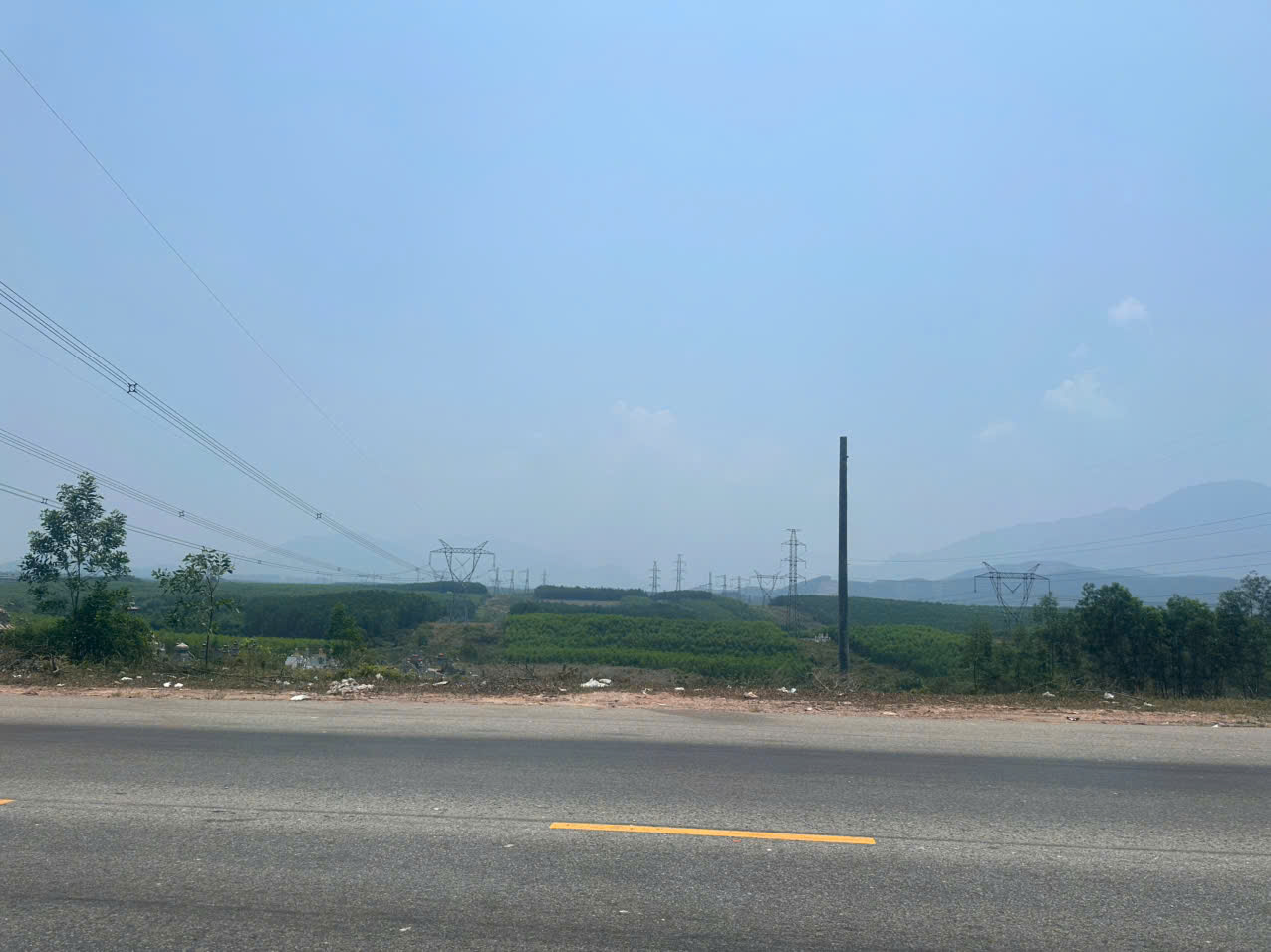
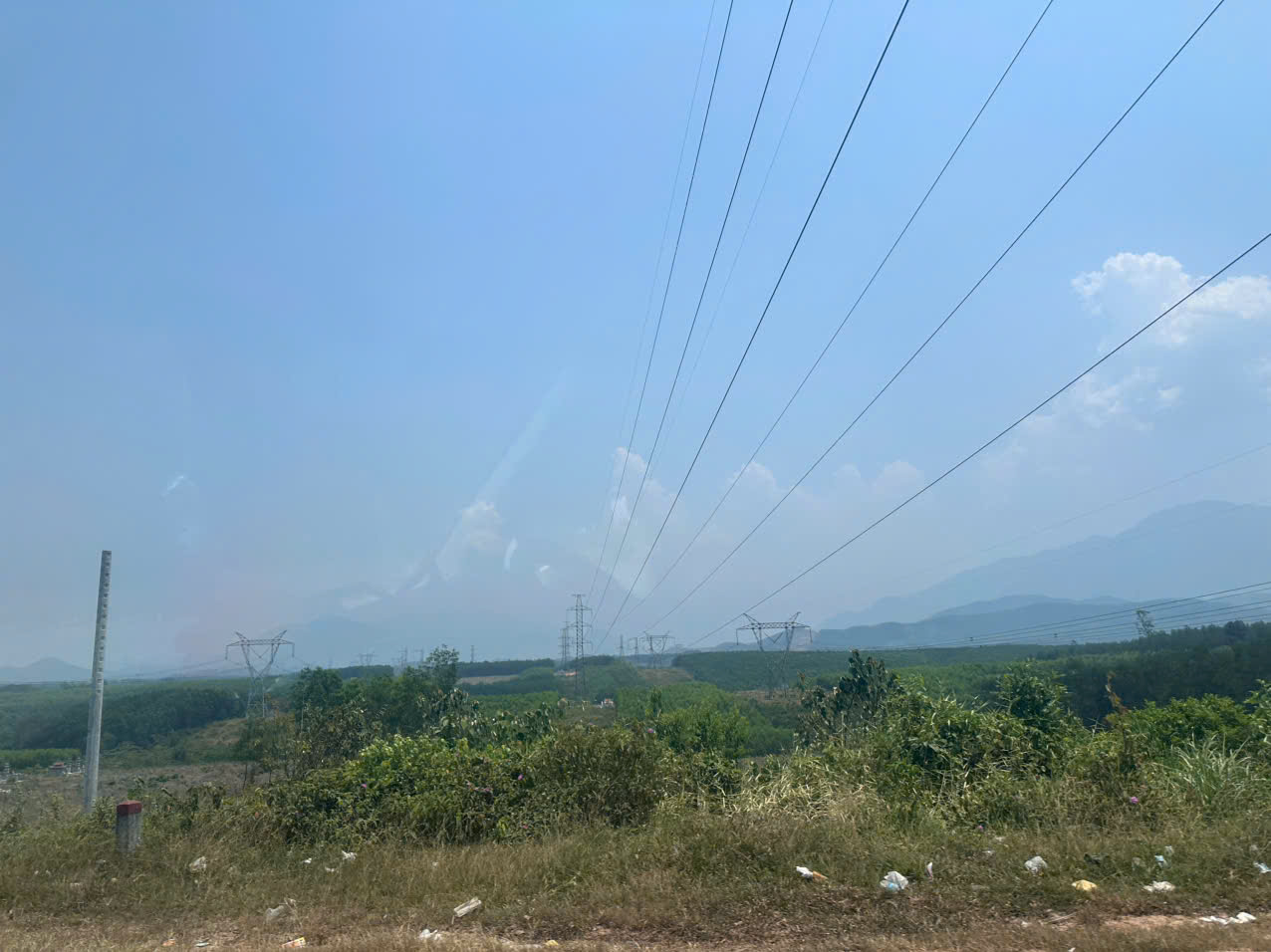
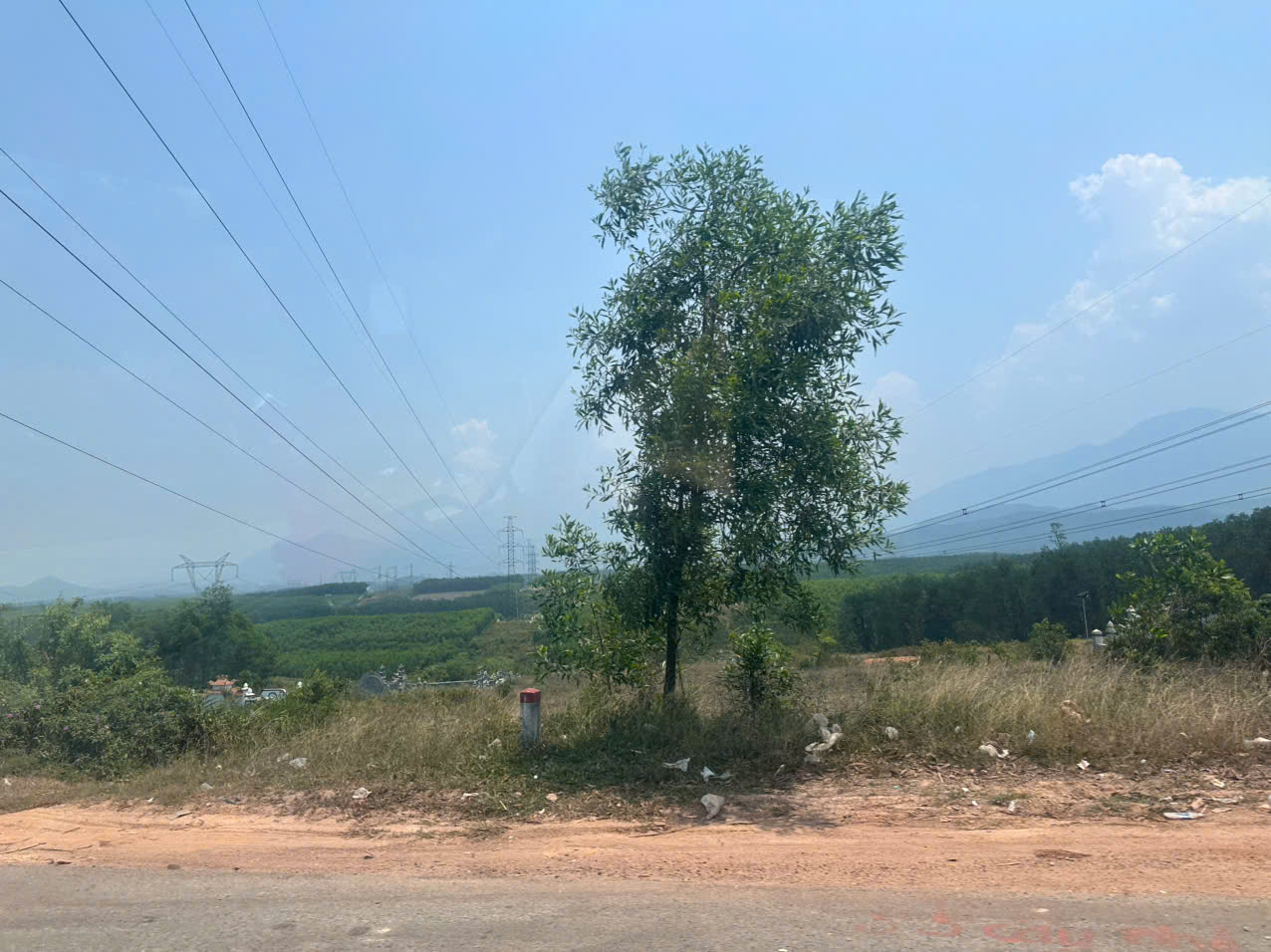
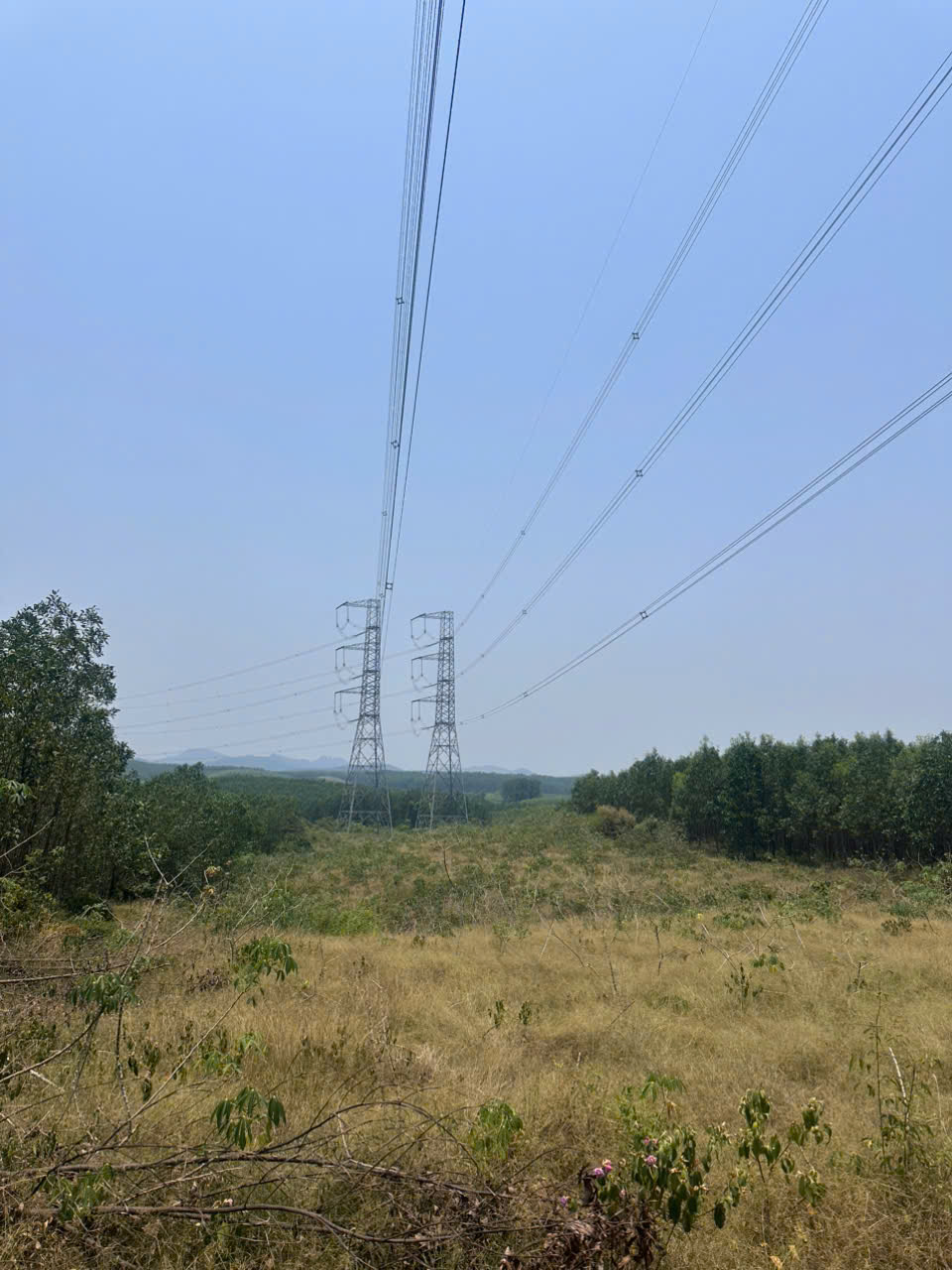
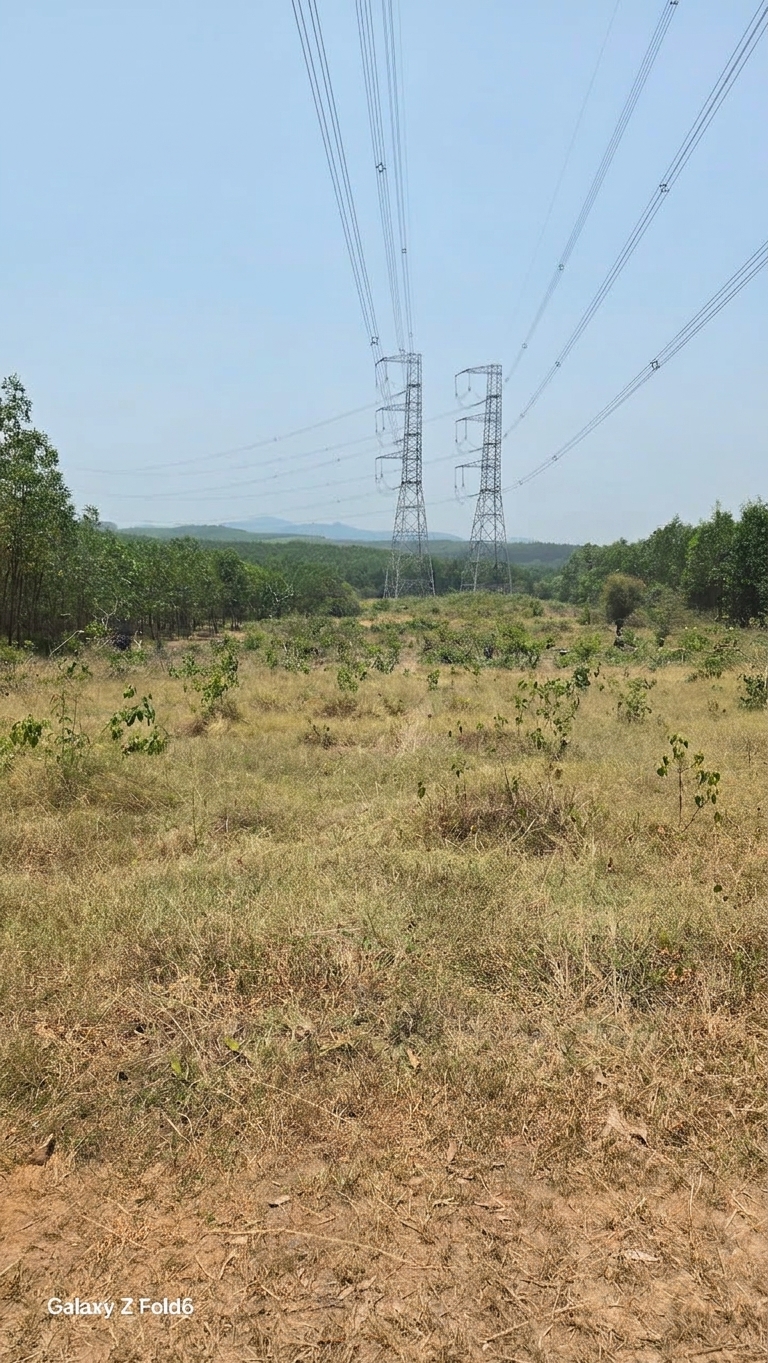
The North–South 500 kV transmission corridor crosses the site — four 500 kV circuits plus two 220 kV circuits — allowing head-end substations to be built inside the park boundary (PK-4) rather than wheeled in over distance.
Ta Trach reservoir, ~2 km from the boundary, licensed at 2.0 m³/s (~172,800 m³/day) for domestic and industrial supply — an independent surface source, not the municipal system.
Of the site sits in the 5–30 m elevation band on competent granite bedrock, with a bearing safety factor of 15–50× data center requirements. No geological faults cross the planning area.
Distance to the coast exceeds the ASHRAE A2 salt-corrosion threshold, avoiding special protection measures and reducing equipment maintenance cost by an estimated 15–20% over a 20-year life versus a coastal site.
Households to be resettled (Ben Van, Duong Loc, Hoa Loc hamlets), on production forest with low settlement density — no mass relocation, and site formation cost that is marginal relative to comparable Vietnamese parks.
Zero inundation, guaranteed. Extreme-flood protection is designed to a 1/1,000-year return period — far beyond the 1/100-year basis typical of industrial parks — and absolute non-flooding of the data center platform is carried as a binding core technical condition, not a design aspiration — backed by flood canals, controlled cooling-water routing, the hydropower-dam-class Ta Trach dam and its professional state-owned operator.
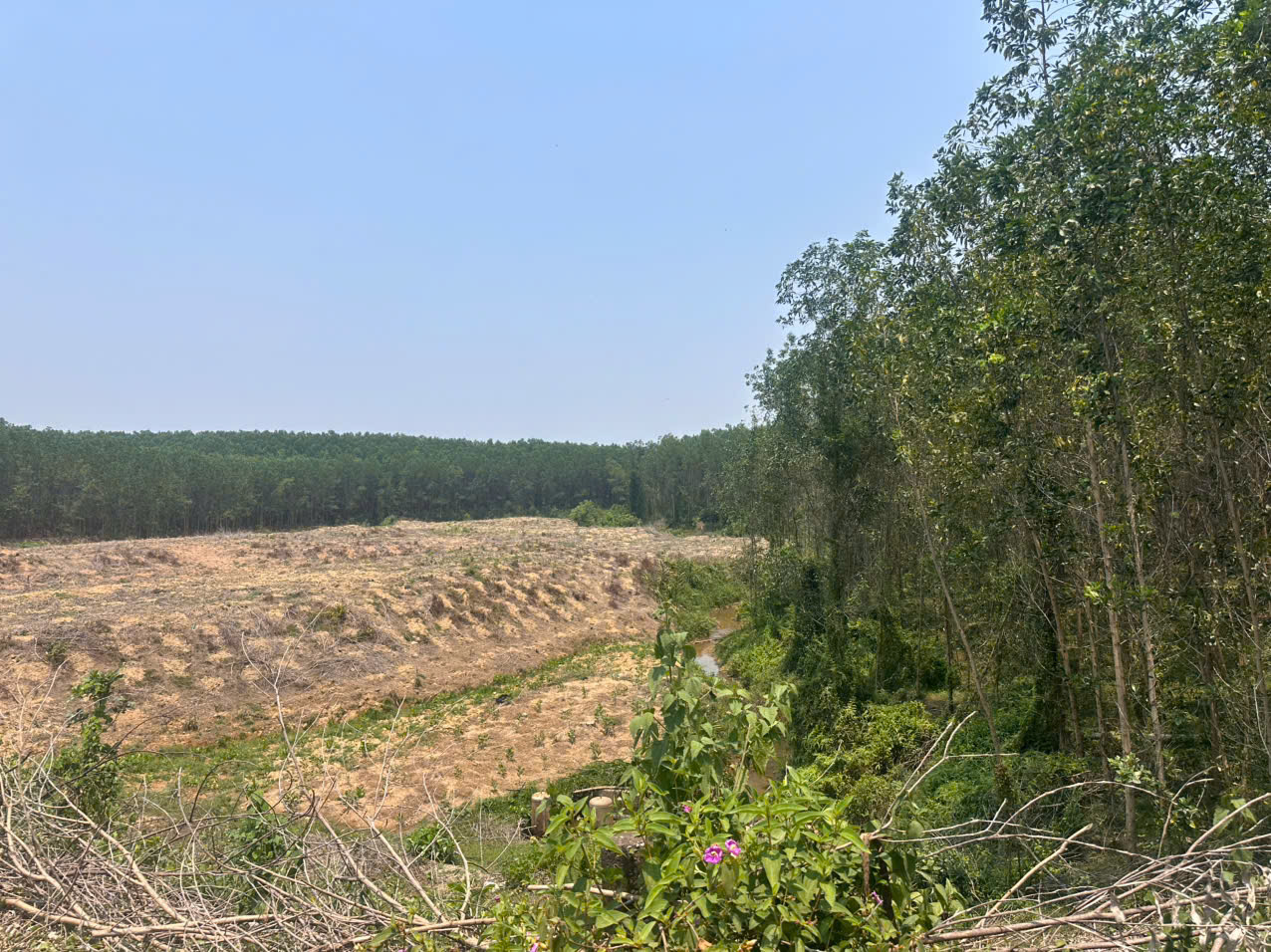
Of the 1,081 ha, roughly 700–800 ha is topographically straightforward to develop; the balance is upland and water body retained as landscape and robotics test terrain.
02Site & Regional Access
2.1 Boundary and dimensions
| Parameter | Value |
|---|---|
| Administrative location | Hung Loc Commune, Hue City (south-east of Hue City centre) |
| Total planned area | 1,081 ha |
| Centroid | 16.31441°N, 107.697017°E (WGS84) |
| Dimensions | 4.29 km east–west × 5.38 km north–south |
| North & east boundary | Cam Lo – La Son Expressway |
| South boundary | Hung Loc Commune (remainder) |
| West boundary | Phu Bai Ward, Hue City |
| Readily buildable area | ≈ 700–800 ha |
| Park format | Open type — no perimeter wall; boundary controlled by survey markers |
2.2 Regional connectivity
| Node | Distance | Notes |
|---|---|---|
| Phu Bai International Airport | ≈ 11 km | 9.7 km measured to the commune boundary. See §20 for the aviation-corridor item. |
| Hue City centre | ≈ 25 km | — |
| Chan May Deep-Water Port | ≈ 50 km | Principal seaport for heavy and oversized deliveries. |
| La Son Industrial Park | ≈ 2 km | 301.16 ha approved 1/2,000 detailed plan; Zone 2 expansion of 225.6 ha approved by Decision 777/QD-UBND dated 7 Mar 2026. |
| High-speed rail alignment | ≈ 10 km | National strategic railway project. |
| Road access | Adjacent | Provincial Road 15B connects to TP 14B and National Highway 1A; direct access to the Cam Lo – La Son – Tuy Loan Expressway (La Son–Tuy Loan section, ~80 km Hue–Da Nang, being widened to four lanes). |

2.3 Urban amenities and living environment
The park is not a greenfield in isolation: the civic amenities that international staff, engineers and relocating families require are already in place nearby, and the wider living and settlement environment is being actively upgraded by the City as part of the high-tech park programme.
Airport. Phu Bai International Airport ~11 km — scheduled domestic and international services. Healthcare. Hue Central Hospital — one of Vietnam’s three top-tier central hospitals — plus the Hue University of Medicine and Pharmacy hospital system. Public security. Commune- and ward-level police and administrative services operate in Hung Loc and adjacent wards. Education. Public schools serve the commune today, with Hue University — one of Vietnam’s major regional universities — anchoring the tertiary and STEM talent pipeline in the city.
A millennium heritage city. Hue is Vietnam’s ancient imperial capital; the Complex of Hue Monuments is a UNESCO World Heritage Site, and the city is one of the country’s premier tourism destinations. Cost of living. Substantially lower than Hanoi or Ho Chi Minh City for housing, services and daily life. Fresh local supply. Year-round fresh vegetables and fruit from the surrounding agricultural belt and daily fresh seafood from the coast and the Tam Giang lagoon system. The City is progressively upgrading housing, international schooling and lifestyle amenities as part of the settlement-environment programme accompanying the park.
2.4 Benchmark against Vietnam’s established high-tech parks
| Criterion | Hue HTP | Da Nang HTP | Hoa Lac HTP | SHTP (HCMC) |
|---|---|---|---|---|
| Area (ha) | 1,081 | 1,128 | 1,586 | 913 |
| Land price (USD/m²) | Low | High | High | High |
| Power tariff (USc/kWh) | Potentially lower with private power infrastructure | ~8–9 | ~8–9 | ~8–9 |
| Distance to airport | 9.7 km | 17 km | 47 km | 18 km |
| Distance to seaport | 34.3 km | 25 km | 150 km | 10 km |
| Cooling water | Ta Trach reservoir, confirmed at 100,000 m³/day ★ | Limited | Limited | Limited |
| Available power | 800 MW (Phase 1+2), targeting 1,550 MW cumulative by 2032 | Limited | Limited | Limited |
| Submarine cable | 80 km (Da Nang) | 0 km (direct) | Long | 100 km (Vung Tau) |
03Zoning Framework — PK-1 to PK-5
The land-use balance below is the controlling zoning reference for the project. Every subsequent infrastructure figure in this document is sized against it.
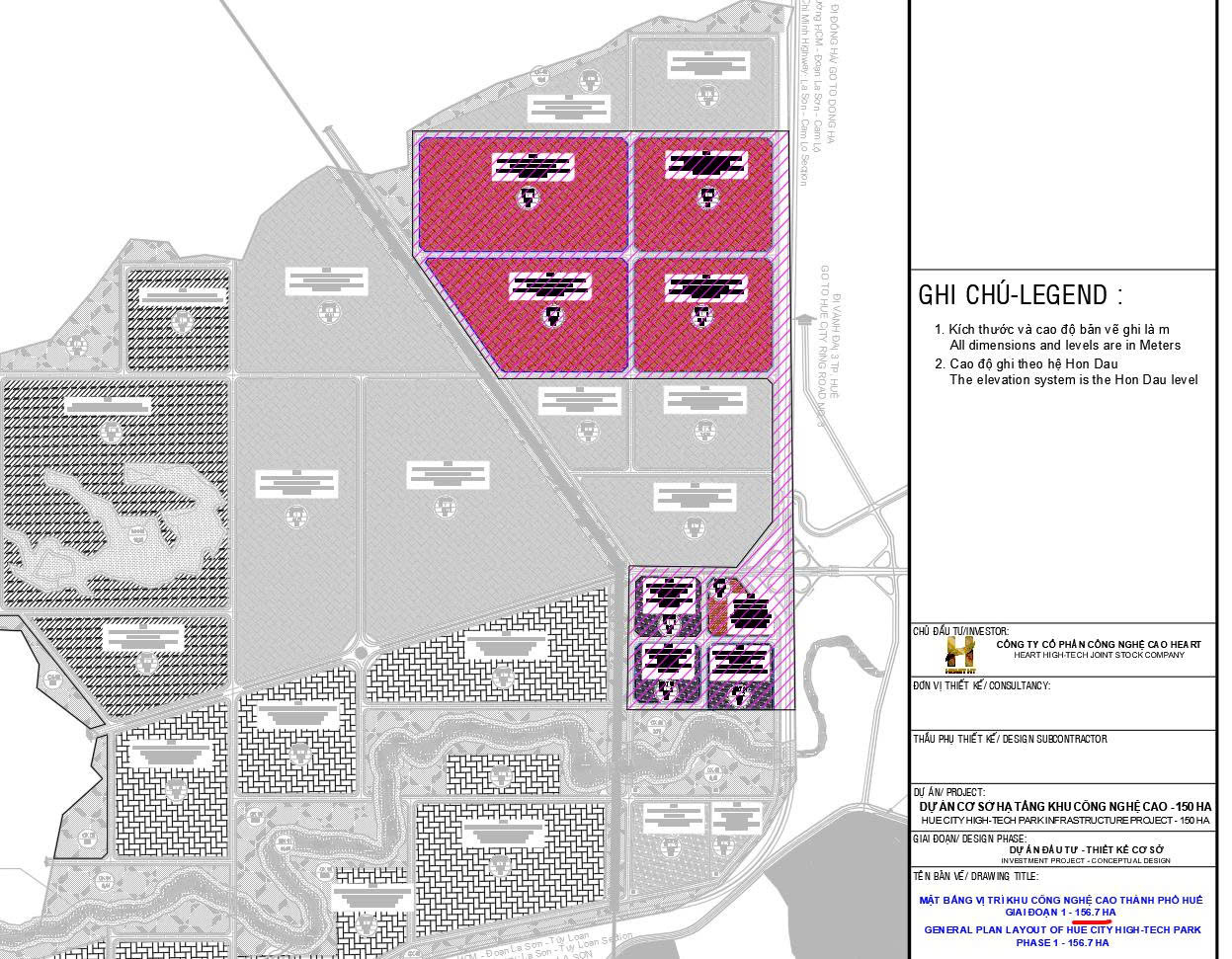
| No. | Zone / land category | Code | Area (ha) | Share (%) |
|---|---|---|---|---|
| PK-1 | High-tech R&D and pilot production | NC-SXTN | 272.07 | 25.24 |
| PK-2 | High-tech infrastructure (AI Data Center) | HT CNC | 319.52 | 29.56 |
| PK-3 | High-tech services and amenities | DVHH | 88.61 | 8.20 |
| PK-4 | Head-end technical infrastructure | HTKT | 28.98 | 2.68 |
| PK-5 | Greenery – water bodies – landscape | CX, MN | 235.93 | 21.03 |
| 6 | Protective green buffer | CXCL | 19.01 | 1.76 |
| 7 | Roads | GT | 116.08 | 10.74 |
| TOTAL PLANNED AREA | 1,081 | 100.00 |
3.1 Zoning principles
- Functional coherence between R&D and pilot production; high-tech infrastructure (AI data center); services and amenities; head-end technical infrastructure; and green–water–landscape.
- Statutory 15% cap on the services and amenities group (excluding technical infrastructure, greenery and water bodies) under Article 19(1)(d) of Decree 260/2026/ND-CP. At 8.20%, PK-3 is planned materially below the cap.
- High allocation to green and water — PK-5 plus the buffer is 22.79% of the site — supporting microclimate regulation and landscape integration, and excluded from the 15% service cap.
- Residential accommodation sits outside the park boundary. Long-term worker and expert housing is planned adjacent to or surrounding the park under Articles 19(1) and 24 of Decree 260/2026/ND-CP. Only short-stay accommodation directly serving high-tech operations is permitted inside the boundary (Article 30).
- Each zone is subdivided into coded functional lots with individual land-use parameters, giving flexibility in investment attraction and phased delivery.
04PK-1 — R&D and Pilot Production · 272.07 ha
PK-1 is the knowledge and prototyping core of the park. The zone is deliberately designated “pilot production” rather than “industrial production”: under High Technology Law 133/2025/QH15 the park prioritises research, technology mastery and controlled testing, and does not host purely commercial-scale industrial manufacturing within its boundary.
a) Advanced research centres
- IT laboratories — AI, machine learning, IoT, information security, semiconductor IC design
- Biotechnology laboratories — genomics, recombinant proteins, next-generation vaccines, crop and livestock genetics, biofuels
- High-tech and strategic-technology R&D centres
- New materials, nanomaterials and semiconductor materials laboratories
- High-tech medical and pharmaceutical applications centre, in cooperation with Hue Central Hospital and Hue University of Medicine and Pharmacy
b) Incubation and acceleration
- Technology start-up incubator with shared laboratories, office space and mentoring
- Accelerator for commercialising Hue University research outputs
- Co-working space and fab lab for the innovation community
c) High-tech workforce training
- Joint training centre with Hue University — AI, semiconductor and robotics engineering
- Vocational centre — cleanroom technicians, high-tech equipment operators
- International training centre linked to institutions in Japan, Korea and Taiwan (semiconductors and AI)
d) / e) Applied technology and pilot manufacturing (289.4 ha)
- Microelectronics and semiconductor pilot line — cleanrooms class 100–10,000, chemical handling systems, ultrapure water (UPW)
- Electronic components, sensors and IoT devices pilot production
- Robotics and automation equipment pilot production — industrial robots, service robots, AGVs
- High-tech pharmaceuticals — GMP-WHO compliant plant
- High-tech medical devices — diagnostic and therapeutic equipment, high-grade consumables
- New materials — composites, polymers, nano and semiconductor materials
- Technology transfer centre bridging research and production
f) International AI Robot Certification Center
A dedicated testing and certification capability for robotics and AI products — the first of its kind planned in Vietnam, and a differentiator for tenants who require in-country conformity assessment.
g) Mountain Robot Test Bed
Located on the upland portion of the site with natural vegetation retained. Field testing for autonomous and field robots, unmanned ground vehicles (UGV/AGV), and localisation, navigation, sensing and recognition algorithms in unstructured environments — slope, canopy occlusion, rough terrain. Simultaneously performs microclimate and landscape functions.
g) River Robot Test Bed
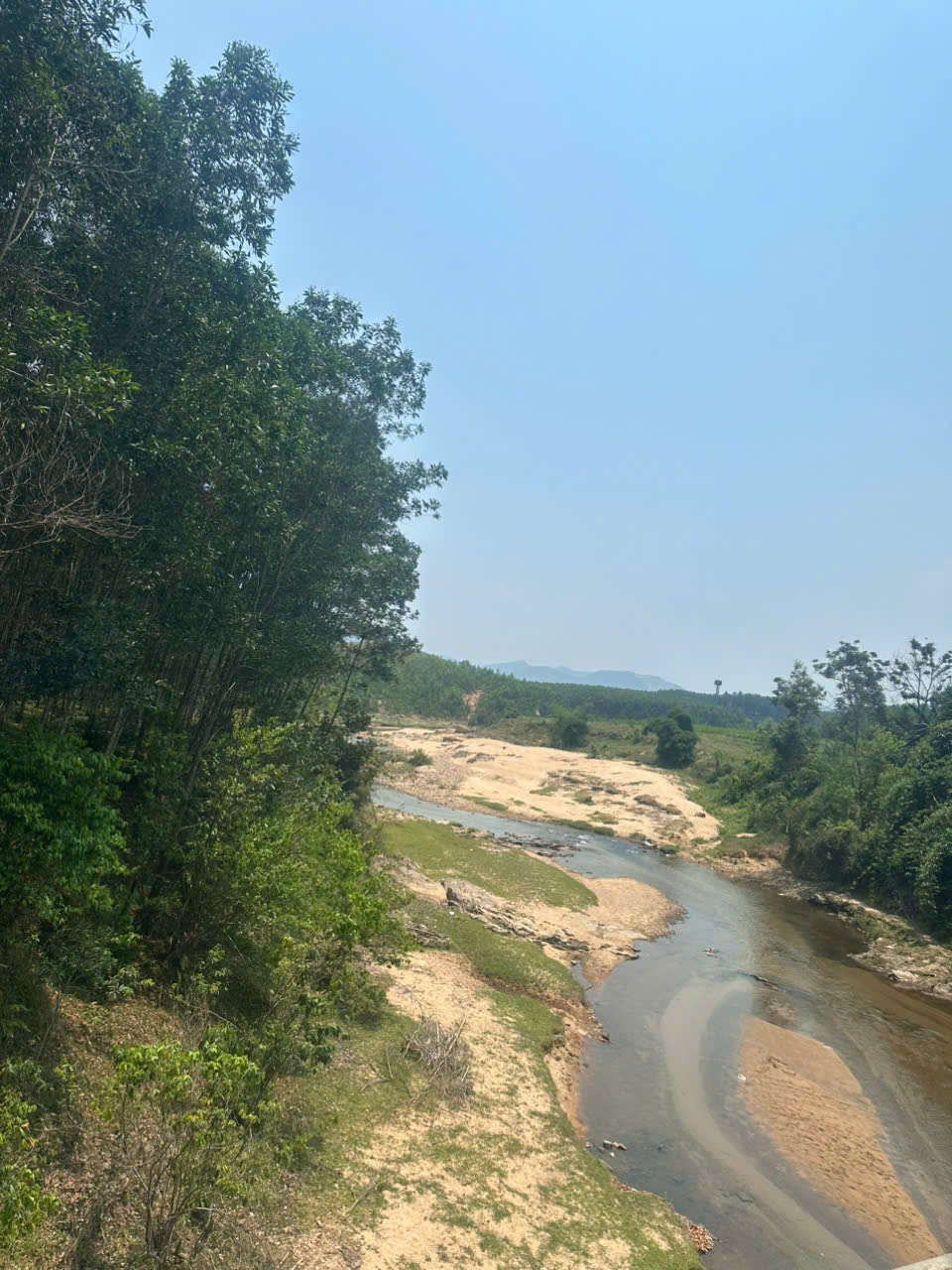
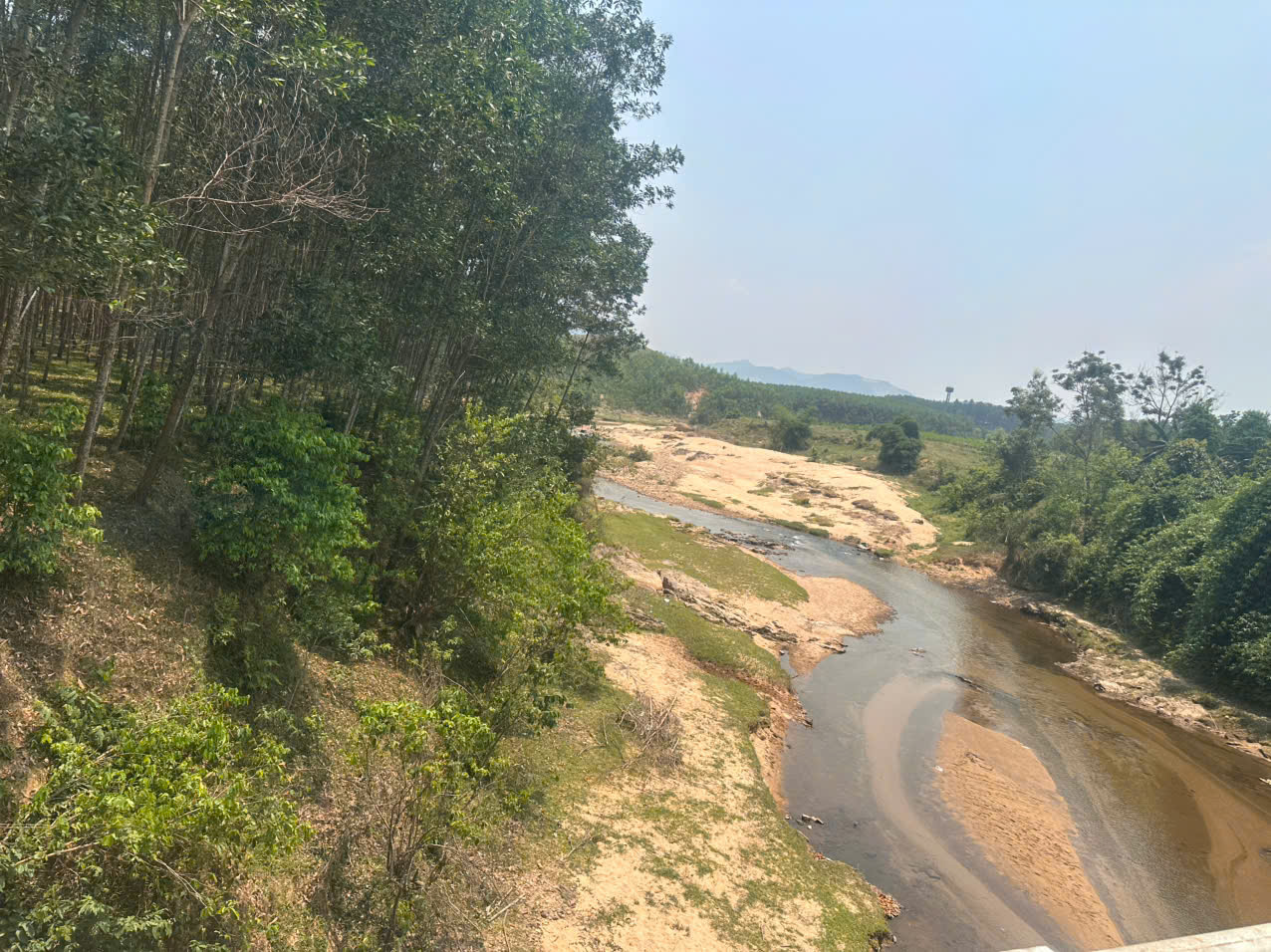
Riparian green corridor plus the river water body as a test range for underwater and surface autonomous vehicles (AUV/ASV), hydrological technology, environmental sensing and water-quality monitoring. Complements the mountain test bed and provides ecological amenity for the working population.
05PK-2 — AI Data Center Zone · 319.52 ha · the anchor
PK-2 is the largest zone in the park and its economic anchor. The AI data center is classified as technology infrastructure — computing and data infrastructure, digital platform and controlled test environment — and not as social utility infrastructure, which is the basis on which the project accesses the corresponding incentive regime. The incentive package available to the AI DC investor — tax, customs, land, speed and people — is set out in §17.
5.1 Why the data center anchors the master plan
- Anchor load. Large, stable, long-duration electrical demand is what justifies building the 500/220 kV head-end substations in PK-4 and the associated cooling and connectivity infrastructure as a single coordinated programme.
- Adjacency. PK-2 sits immediately adjacent to the head-end power infrastructure, minimising transmission distance and supporting N-2 reliability.
- Ecosystem pull. Available compute capacity is the input that draws the research, pilot production and start-up activity planned in PK-1.
- Reserve land is set aside within the zone for long-term data center expansion beyond the current programme.
5.2 Development typology — horizontal, modular, low-rise
Unlike a conventional industrial park, which needs comparatively little land, an AI data center campus is developed horizontally as independent low-rise modules. The report sets out four reasons this is treated as a technical and economic necessity rather than a preference:
- Capital efficiency. Module-by-module phasing matches capital deployment to demand and avoids a single large outlay; shared power, cooling and network infrastructure across a wide footprint reduces unit cost per MW of compute.
- Technology adaptability. Chips, GPUs and cooling solutions change continuously; a distributed modular layout allows upgrade, replacement or expansion of individual blocks without interrupting operating blocks.
- Schedule. Modules are designed, constructed and commissioned in parallel, substantially shortening delivery compared with a concentrated high-rise facility.
- Operations and safety. Horizontal arrangement simplifies heavy equipment installation and transport, power and fibre routing, and cooling pipework, while meeting demanding floor-loading, ventilation, heat-rejection and fire-protection requirements.
5.3 International reference projects cited in the master plan
| Project | Land | Buildings | Capacity / notes |
|---|---|---|---|
| Stargate — Abilene, Texas, USA | ~1,100 acres (~445 ha) | 8 | Up to 1.2 GW |
| Frontier — adjacent to Stargate | ~1,200 acres | 10 (single-storey) | — |
| Matrix — Sulphur Springs, Texas | 1,677 acres | 30 identical | 100 MW each |
| YTL Green Data Center Park — Kulai, Johor, Malaysia | ~1,640 acres (~664 ha) | Campus | Planned 500 MW; Malaysia’s first hyperscale campus co-powered by on-site solar; AI infrastructure on liquid-cooled NVIDIA GB200 |
| Thailand — Korat | — | — | ~200 MW project |
| Thailand — Chonburi (Eastern Economic Corridor) | — | — | 120–200 MW projects; national target ~1 GW by 2027 |
The common pattern is a large land parcel outside the urban area with low-rise modular buildings — fundamentally different from the small-footprint traditional industrial park.
5.4 Design intent for the Hue AI Data Center (AI DC — “STAR”)
Facility standard
- Uptime Institute Tier III/IV
- Continuous operation at 99.995% availability
- High-performance computing (HPC) systems alongside the AI training estate
Systems
- High-performance GPU/TPU server fleet for large-model training
- Distributed storage architecture
- Advanced cooling: cooling towers, CRAC/CRAH, and direct liquid cooling at rack level
06PK-3, PK-4 and PK-5
6.1 PK-3 — High-tech services and amenities (DVHH) · 88.61 ha
The central district of the park and the operational front door, with a high plot ratio reflecting concentrated mixed-use development. This is the zone counted against the statutory 15% services cap.
- Management and operations block — Hue HTP Management Board headquarters, operating offices, a one-stop administrative centre for investors, security control and technical operations coordination.
- Conference and exhibition centre — international conference facilities, technology exhibition and demonstration space, event and technology-fair venues (consistent with Article 25(4) of Decree 260/2026/ND-CP).
- Commercial and financial — retail centre, commercial bank branches, financial and insurance services; legal, IP, investment brokerage and technology valuation/appraisal services (Article 25(5)).
- Short-stay accommodation and expert services — hotel, villas, serviced apartments for experts, scientists, engineers and visiting staff, permitted inside the boundary under Article 30 as directly serving high-tech operations.
- Social infrastructure — medical, education, sports, cultural, food and beverage, park and public service facilities for the working population.
6.2 PK-4 — Head-end technical infrastructure (HTKT) · 28.98 ha
The technical spine of the park under Article 3(5) of Decree 260/2026/ND-CP, containing:
- Two 500/220 kV substations — large-capacity supply with N-2 redundant configuration serving the AI load
- Water treatment plant and works — potable supply and closed-loop wastewater treatment to environmental standard
- Logistics area — warehousing and coordination of inbound and outbound goods and materials
6.3 PK-5 — Greenery, water bodies and landscape (CX, MN) · 235.93 ha
Not a passive landscape reserve. PK-5 is designated as a living lab — a controlled field-test environment under Article 3(1) of Decree 260/2026/ND-CP, directly linked to PK-1 research activity and the International AI Robot Certification Center. Green and water areas are excluded from the 15% services cap.
- Protective green buffer (CXCL, 19.01 ha) — safety corridor along the 500 kV overhead line and connection areas, doubling as an ecological corridor linking the zones.
- Roads (GT, 116.08 ha) — internal and external road network connecting to the Cam Lo – La Son Expressway, the Ho Chi Minh Road and Provincial Road 15B.
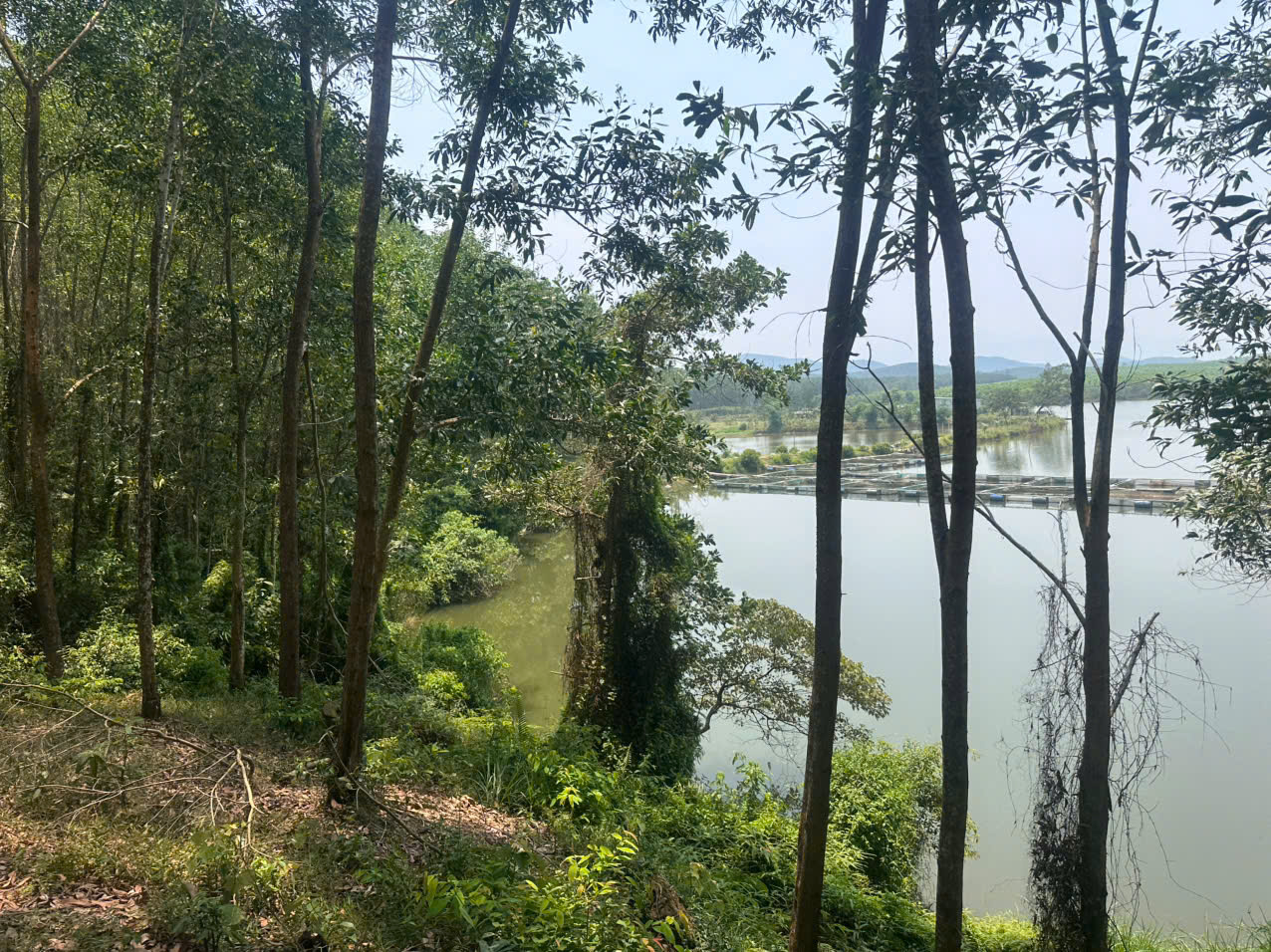
- Ben Van lake (~20 ha) — retained as a landscape feature and, per the water strategy, as a transfer reservoir.
07Power Supply and Route Redundancy Roadmap
Power is the binding constraint on this project, and it is delivered in three cumulative phases — a temporary 22 kV supply, a dual-source 220 kV supply, and a 500/220 kV supply enabled by the national power development plan amendment whose dossier is already on file (§8.2). Each phase adds a voltage level without retiring the one before it. The temporary 22 kV source is retained after the 220 kV connection is energised, and the 220 kV source is retained after the 500/220 kV substation enters operation, so that at every transition the proven source remains available while the new one is being commissioned.
7.1 Basis of record
| Instrument | Content and standing |
|---|---|
| Letter No. 08/CV-HEART, 17 April 2026 | HEART HT statement of power supply demand for the Hue City Hi-Tech Park, Phase 1. |
| Hue Power Company (HPC) response letter | Formal utility reply to Letter 08/CV-HEART, setting the conditions for supply at each voltage level. This is the governing instrument for §7. |
| Power Transmission Company 2 (PTC2) comments, 5 May 2026 | Transmission-side comments incorporated into the HPC response. |
| Working-level agreement with HPC and EVNCPC, 28 July 2026 | Allocation of the temporary 22 kV feeders — the agreed working basis for the short-term phase. |
| Establishment report (DT_BCTH_DeanKHCNHue, 12 July 2026) | Sets the planning envelope: ~1,550 MW ultimate demand, of which ~1,000 MW AI data center and ~550 MW high-tech production, R&D and utilities. |
7.2 Terminology — circuit and double circuit
Vietnamese engineering usage in the correspondence follows a convention that is worth stating explicitly, because it determines how redundancy is counted:
mạch — circuit
One electrically independent circuit.
mạch kép — double circuit
Two circuits strung on the same pole line using double-circuit crossarms. This is not a bundled conductor, which is a different concept entirely.
It follows that two 22 kV double-circuit overhead lines form two physical routes but four electrically independent circuits. Circuit-level redundancy and route-level redundancy are therefore different questions, and §7.4 and §7.7 answer them separately.
7.3 Overall roadmap
| Phase | Voltage | Capacity | Timing | Governing condition |
|---|---|---|---|---|
| Short term | 22 kV (existing network) | 120 MW | T0 Q4 2026 → T1 Q4 2027 | Feeder allocation agreed at working level with HPC and EVNCPC, 28 July 2026 |
| Medium term | 220 kV → 110 kV → 22 kV | Phase 1 balance | N-1 achievable from Q1 2030 | Two independent 220 kV sources required by HPC; Chan May upgrade carried on the City’s priority grid list |
| Long term | 500/220/110 kV | +1,400 MW | pFS dossier filed 11 Aug 2026 (§8.2) | Not in PDP8 or adjusted PDP8 — planning-amendment dossier is a precondition |
| ULTIMATE ENVELOPE (establishment report) | ~1,550 MW | AI data center ~1,000 MW · high-tech production, R&D and utilities ~550 MW | ||
The retention rule is deliberate and has a direct construction consequence: the temporary 22 kV assets are not demolition scope once the 220 kV connection is live, and the 220 kV receiving station is not decommissioned when the 500/220 kV station enters service. Each becomes standing backup.
7.4 Short term — temporary 22 kV supply (120 MW)
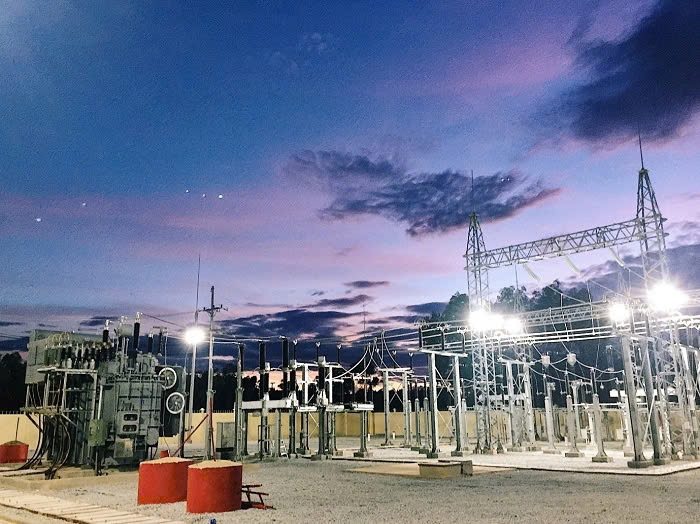
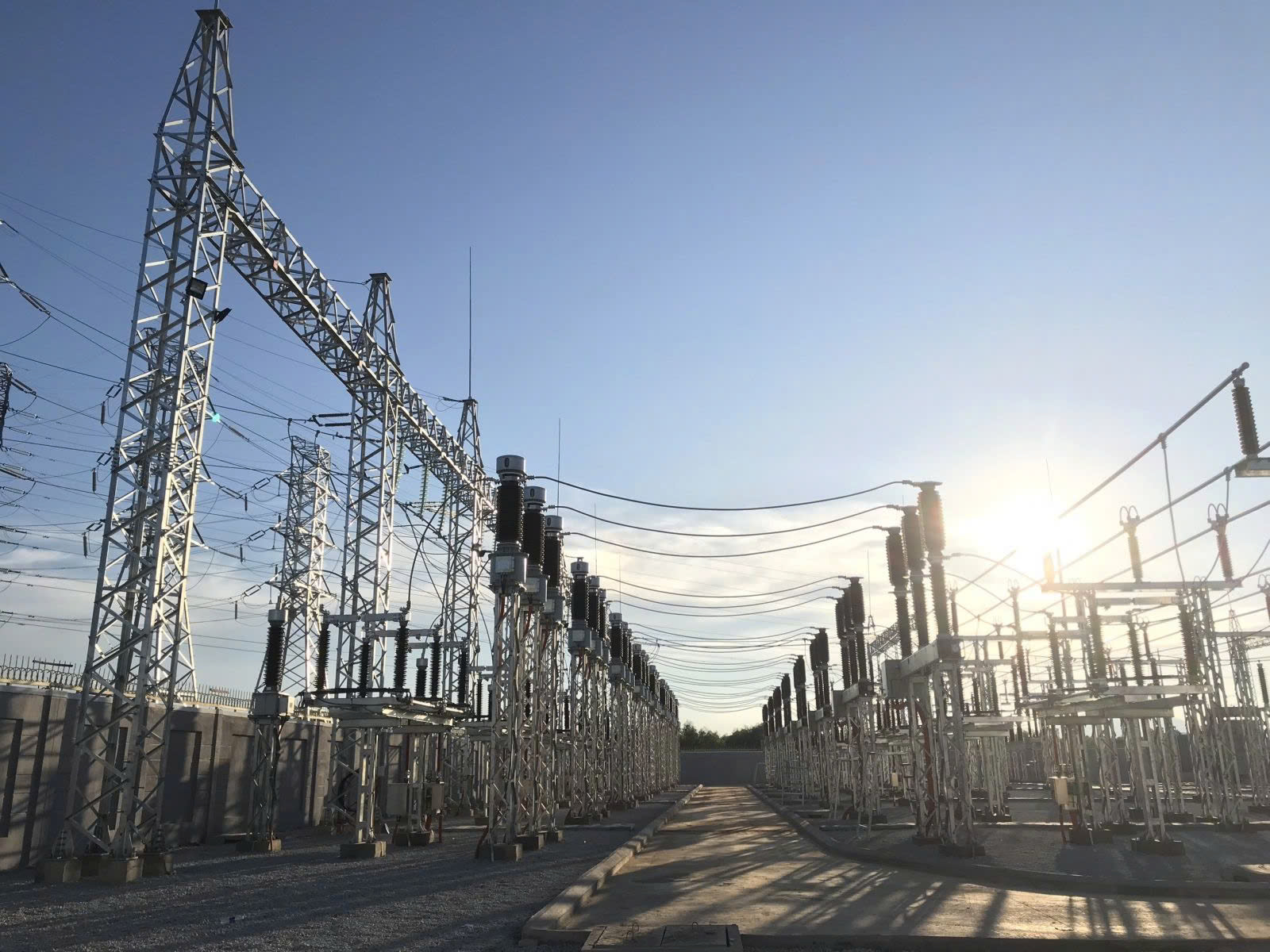
The temporary phase uses the existing 22 kV network — no new transmission asset is on the critical path — and governs the Phase 1 load ramp from T0 in Q4 2026 to T1 in Q4 2027.
| Route | Source substation | Feeders | Capacity | Corridor |
|---|---|---|---|---|
| Route A | La Son 110 kV substation | 4 circuits (2 double-circuit lines) | 80 MW | Line 1 and Line 2 share the same right-of-way and the same pole structures |
| Route B | Phu Bai 2 | 2 circuits | 40 MW | Separate corridor — this is what creates route-level redundancy |
| TEMPORARY ALLOCATION | 120 MW | Ramp T0 Q4 2026 → T1 Q4 2027 | ||
Redundancy analysis
The four circuits provide N-1 redundancy at circuit level.
Because Line 1 and Line 2 share the same right-of-way and pole structures, a single simultaneous event could take all four Route A circuits out at once. Circuit-level N-1 does not survive a corridor event.
The separate corridor from Phu Bai 2 is therefore the actual source of route-level redundancy — not the circuit count on Route A.
7.5 Medium term — dual-source 220 kV supply
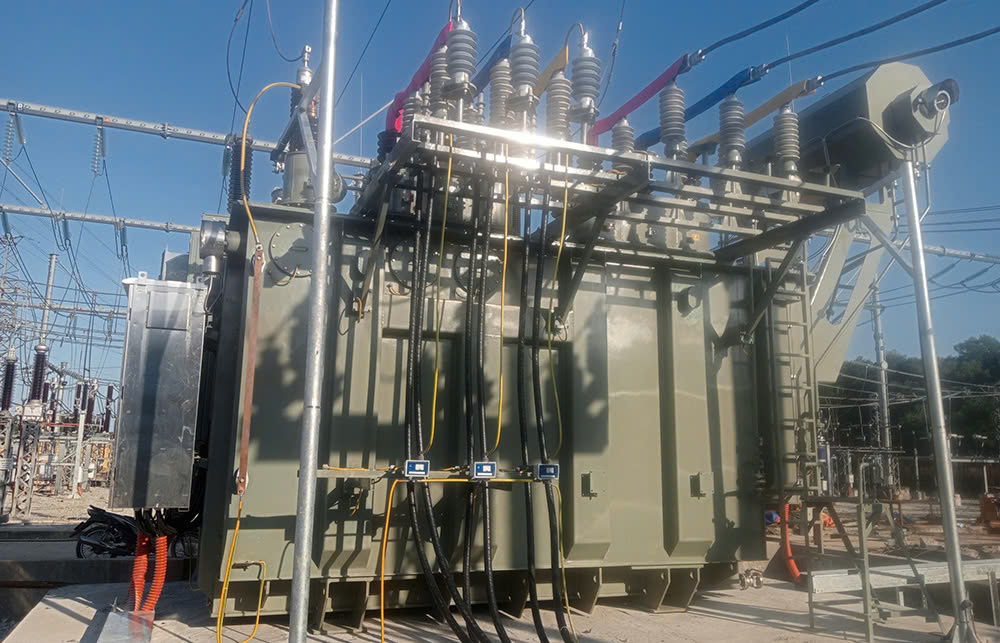
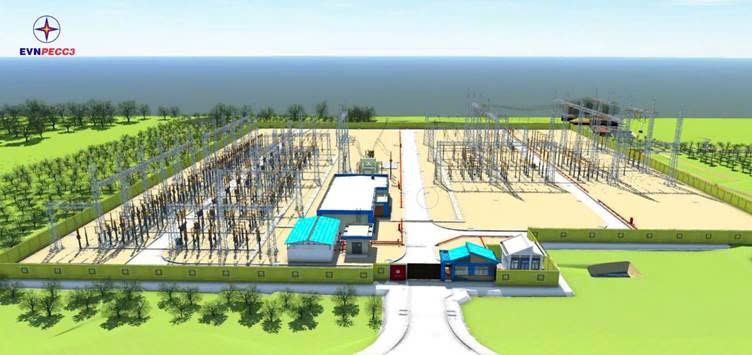
HPC requires continuous supply from two independent sources taken from two different 220 kV substations. The two sources are being brought to readiness on complementary tracks — Hue 220 kV firm today, Chan May carried on the City’s priority grid list.
| Source | Status | Present configuration | Position |
|---|---|---|---|
| Hue 220 kV substation | Satisfies | One station, two 250 MVA transformers | Transformers AT3 and AT4 currently loaded at approximately 35% of rated capacity — substantial headroom available today. |
| Chan May 220 kV substation | Does not satisfy | One station, a single 125 MVA transformer | The power development plan to 2030 envisages an upgrade to two 250 MVA transformers. HPC has asked HEART to register its connection demand with EVN and EVNNPT. N-1 between the two sources is therefore achievable only from Q1 2030, once this upgrade is complete. |
HEART receiving substation and in-park distribution
| Element | Configuration |
|---|---|
| Receiving substation | Steps down from 220 kV to 110 kV via two 250 MVA main transformers |
| 110 kV distribution | Distributes at 110 kV to HTZ-SS1, HTZ-SS2 and HTZ-SS3 |
| In-park step-down | Each HTZ substation steps down further to 22 kV for distribution within the park |
Internal 110 kV distribution is designed to two typical section options, selected route by route according to building density, visual amenity and safety-corridor requirements: (i) overhead line on single-pole steel towers — 25 m corridor for a single circuit, 39 m for a double circuit; (ii) underground 110 kV cable in a cable trench or cable tunnel — 25 m corridor.
7.6 Long term — 500/220 kV supply, subject to PDP8 amendment
Phase 2 adds approximately 1,400 MW, which requires connection at 500 kV.
The proposed asset
- Hue City Hi-Tech Park 500/220 kV substation, 3 × 900 MVA
- Connected in transit to the North–South 500 kV double-circuit line that crosses the project area
- The corridor is already on site — four 500 kV circuits and two 220 kV circuits pass through Hung Loc
The blocking condition
HPC confirms that this substation is not included in Power Development Plan VIII, nor in the adjusted Power Development Plan VIII. HPC therefore asks HEART to prepare a dossier proposing a planning amendment for the 500/220/110 kV and 110/22 kV lines and substations supplying the project, comprising a demand statement, capacity balance and connection scheme, for submission to the competent authority for appraisal and approval. This dossier is a precondition for the entire long-term phase.
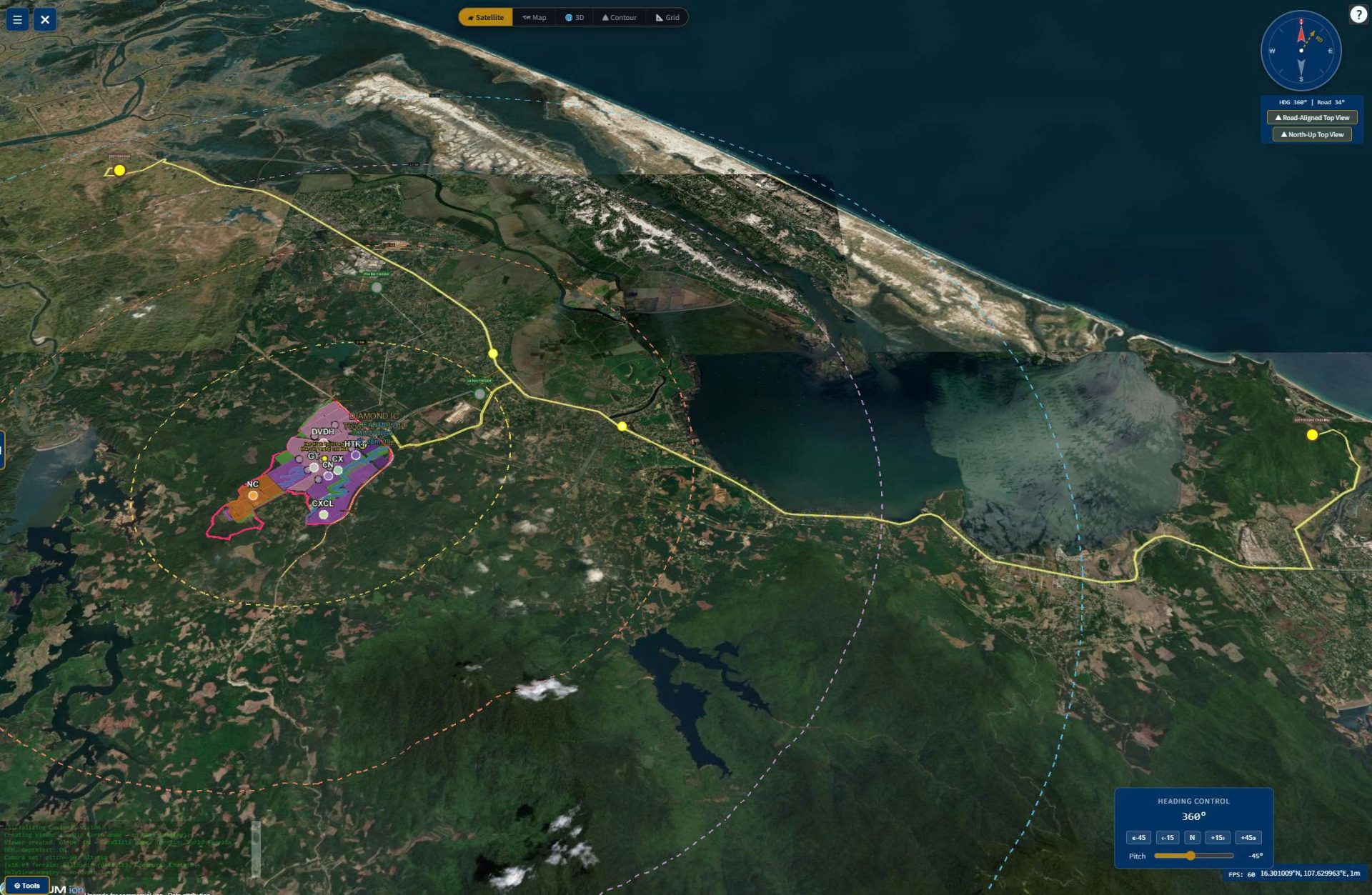
7.7 Redundancy status by phase
| Phase | Circuit level | Route level | Source level | Residual exposure |
|---|---|---|---|---|
| Short term 22 kV, 120 MW | N-1 4 circuits on Route A | Partial Route B on a separate corridor | Two feeds La Son + Phu Bai 2 | The shared ~3 km final segment defeats both, unless separated. Phu Bai 2 carries no firm capacity or reliability commitment in the correspondence. |
| Medium term 220 kV | N-1 2 × 250 MVA main transformers | Yes two independent 220 kV corridors | Not before Q1 2030 | Chan May remains a single 125 MVA transformer until the upgrade lands. Until then the dual-source requirement is met on paper by Hue alone. |
| Long term 500/220 kV | N-2 3 × 900 MVA | Yes transit connection to the 500 kV double circuit | Yes plus retained 220 kV and 22 kV sources | Enabled by the planning amendment now in appraisal — the pFS dossier was filed on 11 Aug 2026 and the project is carried on the City’s priority grid list (§8.2). |
7.8 Technical requirements
| Requirement | Specification |
|---|---|
| Supply reliability | Continuous 24/7 supply with very high availability factor for both the high-tech production areas and the AI Data Center |
| Redundancy target | Minimum N+1 for data center and semiconductor loads; N-2 across the upstream source system at full build (500/220/110 kV) — supply maintained on simultaneous failure of two elements |
| Power quality | Voltage within ±5%; frequency within ±0.5 Hz; total harmonic distortion (THD) ≤ 5%; compliant with IEEE Std 519 and Circular 39/2015/TT-BCT |
| Reliability class | Rated-4 target consistent with the TIA-942-C connectivity specification in §10 |
7.9 Coordination points and critical path
These four coordination items pace the programme — and each now has a filed dossier or an agreed plan behind it (§8).
| # | Item | Phase | Position and required action |
|---|---|---|---|
| 1 | Shared final segment | Short term | Separated in the filed design (§8.1) — the September 2026 registration draws on two independent 110 kV substations over physically separate corridors, converting the temporary phase to real route redundancy. |
| 2 | Phu Bai 2 commitment | Short term | Registered at the full 40 MW in the filed dossier (§8.1) — Phu Bai 2 is carried as a 100% mutual-backup source, and the temporary-supply plan was agreed with Hue PC and EVNCPC on 28 Jul 2026. |
| 3 | Chan May upgrade | Medium term | The Chan May upgrade to two 250 MVA transformers sets the pace of 220 kV N-1; the project is carried on the City’s priority grid list (150 MVA 2026–2030), and EVNNPT engagement runs in parallel with connection registration. |
| 4 | Planning-amendment dossier | Long term | Already initiated well ahead of schedule — the pFS dossier for the 500/220/110 kV works was filed on 11 Aug 2026 (§8.2), keeping state appraisal off the Phase 2 critical path. |
08Power Grid Connection — Filed Status · September 2026
This section records the grid-connection position as filed with the authorities as at September 2026, and supersedes the indicative short-term figures in §7 where they differ. The Phase-1 registration on file is 40 MW from two independent 110 kV sources with 100% mutual backup — the configuration required for Rated-4. Both source substations exist today, and should State and city objectives allow an earlier start, the Investor intends to accelerate the expansion roadmap on the strength of the commitment package in §20.2 (Report 25/2026).
8.1 Phase 1.1 — 22 kV connection dossier submitted
- Dossier on file. On 28 Aug 2026 the Investor submitted Official Letter 20/CV-HEART with the full technical package (22 kV System Connection Report R5 · preliminary grid-impact assessment · real load roadmap) requesting in-principle acceptance by Hue Power Company — Step 1 of the connection-agreement sequence under Official Letters 3208/SCT-NL and 3593/HPC-KD+KH+KT. The temporary supply plan was agreed at working level with Hue PC and Central Power Corporation (EVNCPC) on 28 Jul 2026.
- Load and reliability. Registered capacity 40 MW from the 110 kV La Son substation and the 110 kV Phu Bai 2 IP substation, each registered for the full 40 MW — 100% mutual backup, satisfying Rated-4 (highest tier, ANSI/TIA-942-C). Of the 40 MW, 37.70 MW (94.25%) is IT and cooling load.
- Connection works. Two double-circuit 22 kV routes from La Son (~4.5 km) and one double-circuit route from Phu Bai 2 (~7 km), ACV-240 conductor; fully investor-funded (~VND 41.9 bn), completion within 2027; second transformers (63 MVA) proposed at both source substations in 2028 in step with expansion.

8.2 Main supply at 110 kV and above — by phase
- Phase-1 main scheme. Two new 110/22 kV substations — KCNC Hue 1 and KCNC Hue 2 (2 × 63 MVA each) — connecting to the 220 kV Hue substation, the 220 kV Chan May substation and the 110 kV Phu Bai 2 substation; planning supplements for the 110 kV and 220/500 kV substations proceed in a dedicated dossier alongside the City’s power development plan update.
- PDP8 amendment — dossier submitted and under appraisal. Per MOIT appraisal criteria (Official Letter 4912/BCT-KHTC), the Investor petitioned for two in-project 500/220/110 kV substations of 2 × 900 MVA each, with ~300 m 500 kV tie-lines lying entirely inside the site boundary (Official Letter 14/2026/CV-HEART) and submitted a pre-feasibility-level dossier on 11 Aug 2026 (Official Letter 18/2026/CV-HEART, completing requirements of 2920/SCT-NL). At city level the project is on the priority grid list (1937/SCT-NL: 150 MVA in 2026–2030 · 1,400 MVA in 2031–2035). At the 16 Sep 2026 session, EVNCPC identified PDP8 inclusion of the two 500 kV substations as the key enabler for large secondary investors — and the Investor has proposed to fund the construction of both 500 kV substations itself (Report 25/2026).
| Milestone | Content | Voltage level |
|---|---|---|
| 2026 | Construction start; ~2 MW site power | 22 kV temporary |
| 2027 | Phase 1.1 energisation — 40 MW registered from two independent sources | 22 kV |
| 2028–2030 | 220 kV connection — ~150 MW | 110 kV – 220 kV |
| Post-2030 | In-project 500/220 kV substation — roadmap to GW scale | 500 kV |
8.3 Load commitment and grid-stability package — CV 24/2026
- Four-part assurance offered to the power sector (Official Letter 24/2026/CV-HEART, 15 Sep 2026): ① the Investor funds 100% of the grid works and hands them to the National Power Transmission Corporation (EVNNPT) on completion (Electricity Law 61/2024 Art. 5.4; Decrees 02/2024 and 77/2025); ② minimum take-or-pay payment on registered capacity of each phase, independent of actual usage — negotiating orientation 60–70% of registered capacity per current international data-center practice, with an early-termination fee of two years of minimum fees; ③ performance security by bank guarantee or letter of credit with per-phase load commitments; ④ participation in the direct power purchase mechanism (DPPA) under Decree 57/2025.
- Two-part tariff ready. The Investor stands ready to adopt the capacity-plus-energy two-part tariff MOIT applies from 01 Jan 2026 (Politburo Resolution 70-NQ/TW) — the capacity component is precisely the registered-capacity payment mechanism offered.
- Grid stability engineered in. A four-layer oscillation-absorption structure and a battery energy-storage system combined with supercapacitors, built in three steps 36 → 63 → 90 MW per the filed pFS and oriented to ~200 MW at full scale — configured as a zone-common grid-stability facility covering a portion of in-park capacity (optimal storage share 20–40% of load, the capital-efficient hybrid point) rather than full self-supply, with the supply plan developed under the exclusive co-development track, third-party supply included; a milestone-verified load-ramp MOU is proposed with Hue Power Company and EVNCPC, witnessed by the Department of Industry and Trade — each load step starts only after the previous step passes grid-impact verification.
8.4 Medium-to-long-term generation sources
- National policy tailwind. MOIT Report 760/BC-BCT to the Prime Minister orients the amended PDP8 toward fast-deploying generation and strengthened cross-border interconnection and imports — precisely the source configuration the park has petitioned for.
- Investor petition. Once the supply scheme is updated into the amended PDP8, prioritise imported Lao hydropower over the central-region 220/500 kV interconnection trunks as the park’s medium-to-long-term source: competitive price, low emissions, feasible schedule.
- Chan May – Lang Co LNG power plant. The Investor has confirmed it will study a long-term co-investment structure, inviting a major Korean LNG-power group to hold the majority role for co-development serving the park and data center directly. Preconditions: gas-price/tariff mechanism, PPA, and fit with the amended PDP8 schedule. Findings will be reported to the People’s Committee.

8.5 A-to-Z power architecture — from renewable DPPA to in-park distribution and grid stability
What a hyperscaler actually diligences is not a headline DPPA tariff but the reliability of the whole chain, from generation to delivery. HEART therefore structures the complete A-to-Z package in advance: wide-area renewable procurement over the national grid and on-site generation in parallel, self-funded grid works handed to EVNNPT, a 100% underground in-park distribution network held by the zone’s own retail business unit, and a staged storage-based stability stack — elevating the site from “powered land” to “a site with a complete, executable power solution”. For the Phase-1.1 40 MW package, an exclusive co-development track with a Renewables Major candidate is in structuring under NDA — DPPA registration and settlement expertise, wide-area renewable aggregation, a supply plan for the zone-common BESS stability facility (third-party supply included) and delivery guarantees with renewable-attribute transfer — against anchor demand visibility of up to ~15 years, while the zone electricity-retail right itself remains with HEART.
The park’s supply position, in plain terms: at 22 kV, two circuits of 40 MW each are allocated (AIP) and building now, with a further 40 MW expandable on the same corridors; at 110 kV, two circuits of 150 MW each are secured — one available immediately, the other built out against a demand-backed commitment; and at 500 kV, the in-park substations are moving through the PDP-8 amendment, with the newly planned nearby 500 kV substation being moved inside the park on a demand basis — the platform for a Giga-Scale Campus. The three levels are cumulative, not substitutional.
DPPA under Decree 57/2025, as amended by Decree 243/2026 (in force 26 Jun 2026, no transitional period): data centers written in as qualifying large consumers (Arts. 3.23, 2.1b); the high-tech park as a DPPA zone (Art. 3.21); a zone electricity-retailer regime (Arts. 8a, 2.1c); the dedicated-line price ceiling removed (Art. 6.1.b); rooftop-surplus sales raised 20% → 50% (Art. 6.3). Two-part tariff applies from 01 Jan 2026 (Resolution 70-NQ/TW); grid-works handover rests on Electricity Law 61/2024 Art. 5.4.
The AI data center’s own committed load anchors the zone (94.25% of the Phase-1.1 registration), so demand risk is structurally internalised — no stranded-intermediary exposure. As zone retailer, HEART is the counterparty that must connect a tenant’s DPPA within seven days — the gatekeeping position in the zone’s electricity market. Physical base: two existing 110 kV sources at 100% mutual backup, and a 100% underground duct-bank network on two physically separate routes.
Hybrid procurement (grid + on-site solar-BESS + off-site vDPPA) targets a blended cost of USD 42.9–49.0/MWh against the first commercial DPPA CfD benchmark of 61.0 — up to USD 12–18/MWh of structural advantage — with 24/7 carbon-free matching of 57–69% offered as a premium feature to anchors. The 50% surplus ceiling multiplies monetisation headroom 2.5×, and the take-or-pay plus two-part-tariff frame turns the load into bankable revenue that unlocks early substation build-out.
Two in-project 500/220/110 kV substations of 2 × 900 MVA each with ~300 m in-boundary tie-lines; a four-layer oscillation-absorption stack with BESS staged 36 → 63 → 90 MW toward ~200 MW; integrated power-and-water SCADA. Against a region where Viet Nam operates ~73 MW of data-center capacity and new 100 MW connections take 2–3 years, and Thailand can serve 18.7% of applications, HEART’s filed track runs to 2027 energisation — time-to-power is the product.
09Cooling Water Infrastructure
The dominant loads — large-scale AI data centers and high-tech manufacturing (semiconductor, robotics, electronics) — are all in the very high cooling-water demand category with demanding purity requirements. Supply is structured as a multi-source strategy with redundancy.
9.1 Demand profile
| Phase | Operation | Power (MW) | Load types | Raw water (m³/day) |
|---|---|---|---|---|
| Phase 1 | Q4 2027 | 150 | AI DC; high-tech production; R&D; utility infrastructure | ~13,000 |
| Phase 2 | to 2031 | 1,550 | Large-scale AI DC; semiconductor; robotics; high-tech production | ~100,000 |
Actual capacity ramps with tenant and secondary-investor demand; the maximum for each phase is not necessarily reached immediately.
9.2 Primary source — Ta Trach reservoir
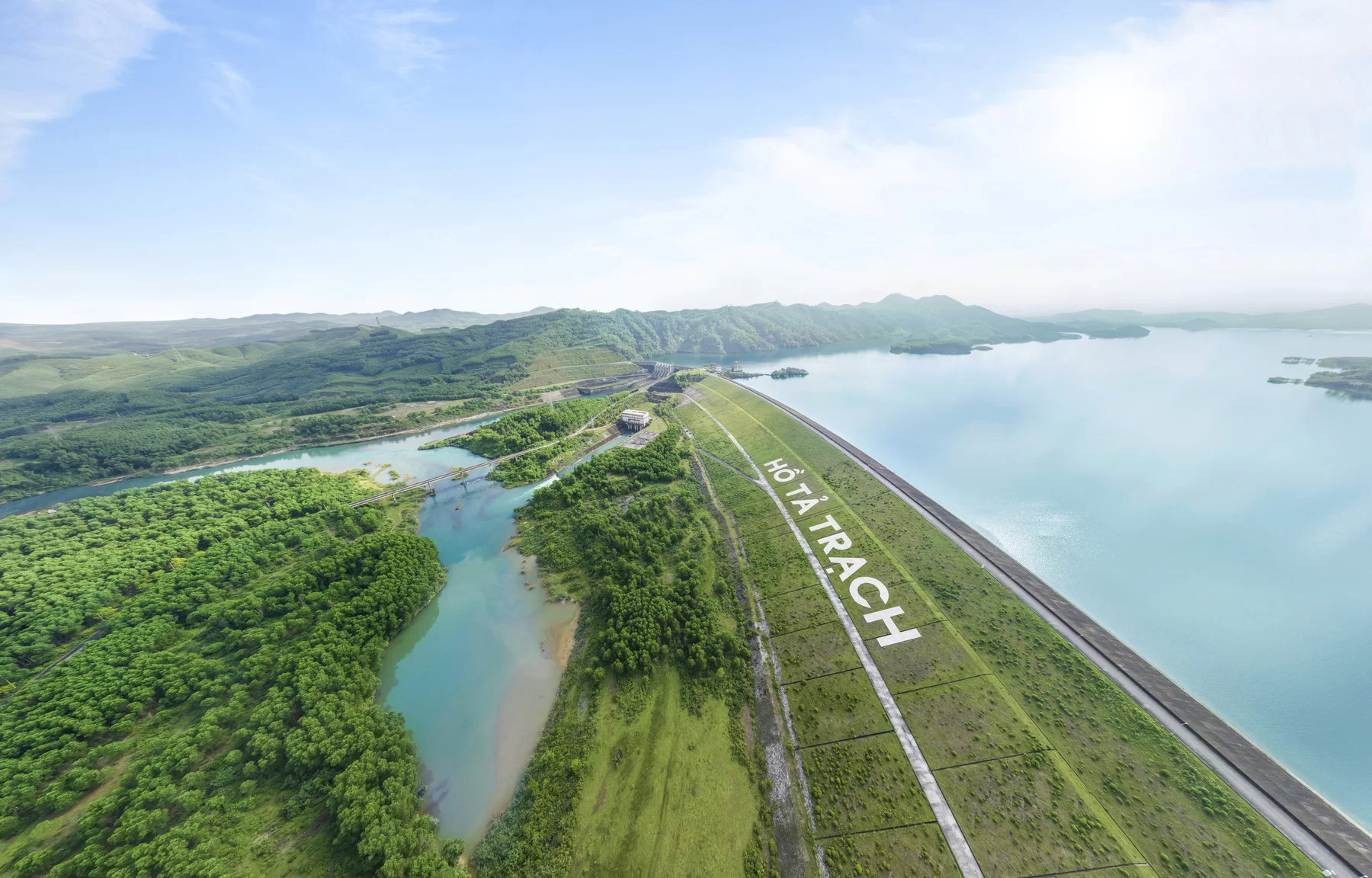
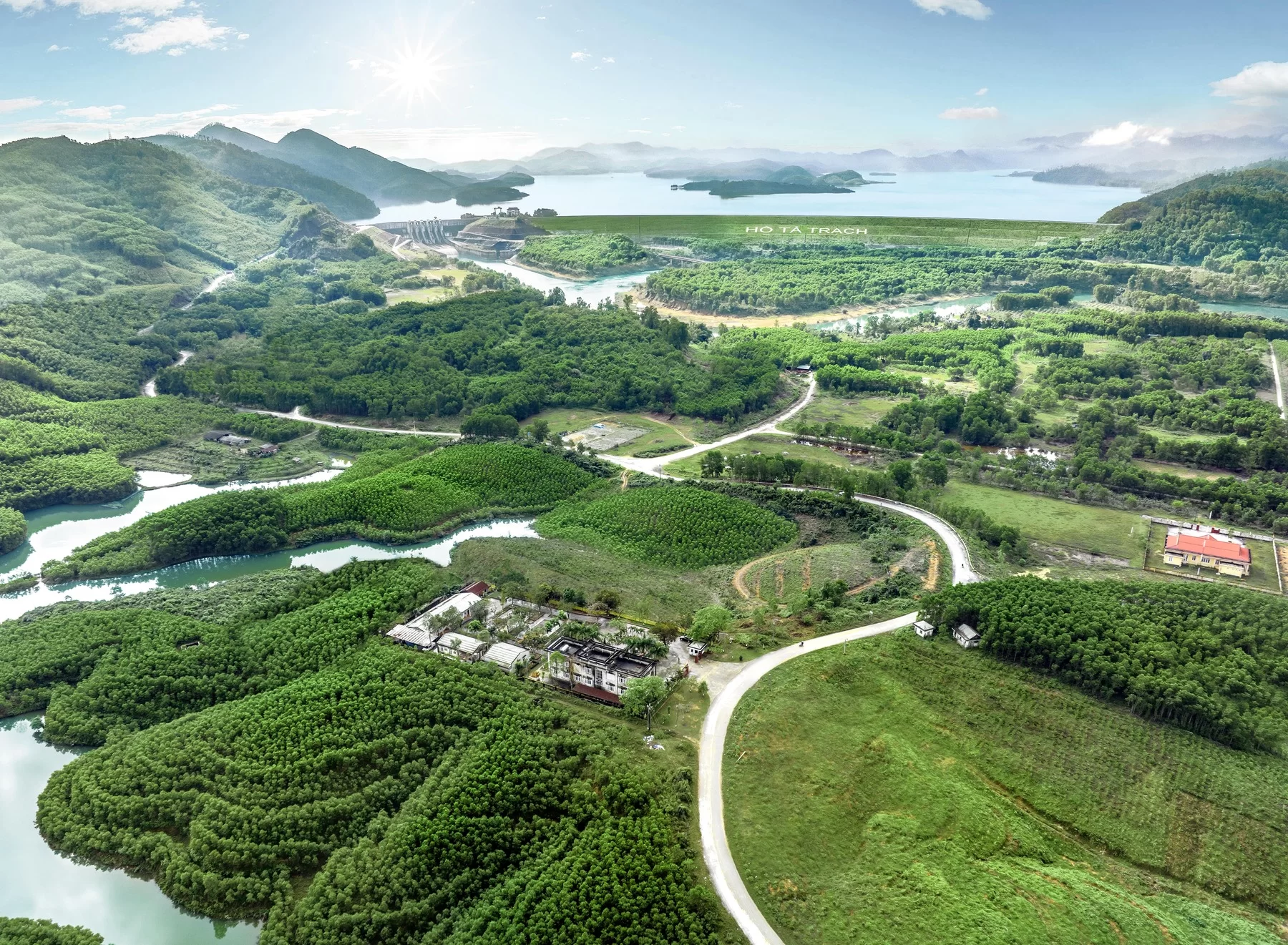


- Storage: 420 × 10⁶ m³ at normal water level. Managed by Irrigation Investment and Construction Management Board No. 5, Ministry of Agriculture and Environment.
- Existing licence: Surface water exploitation licence No. 275/GP-BTNMT dated 28 Oct 2022, permitting 2.0 m³/s (~172,800 m³/day) for domestic and industrial supply.
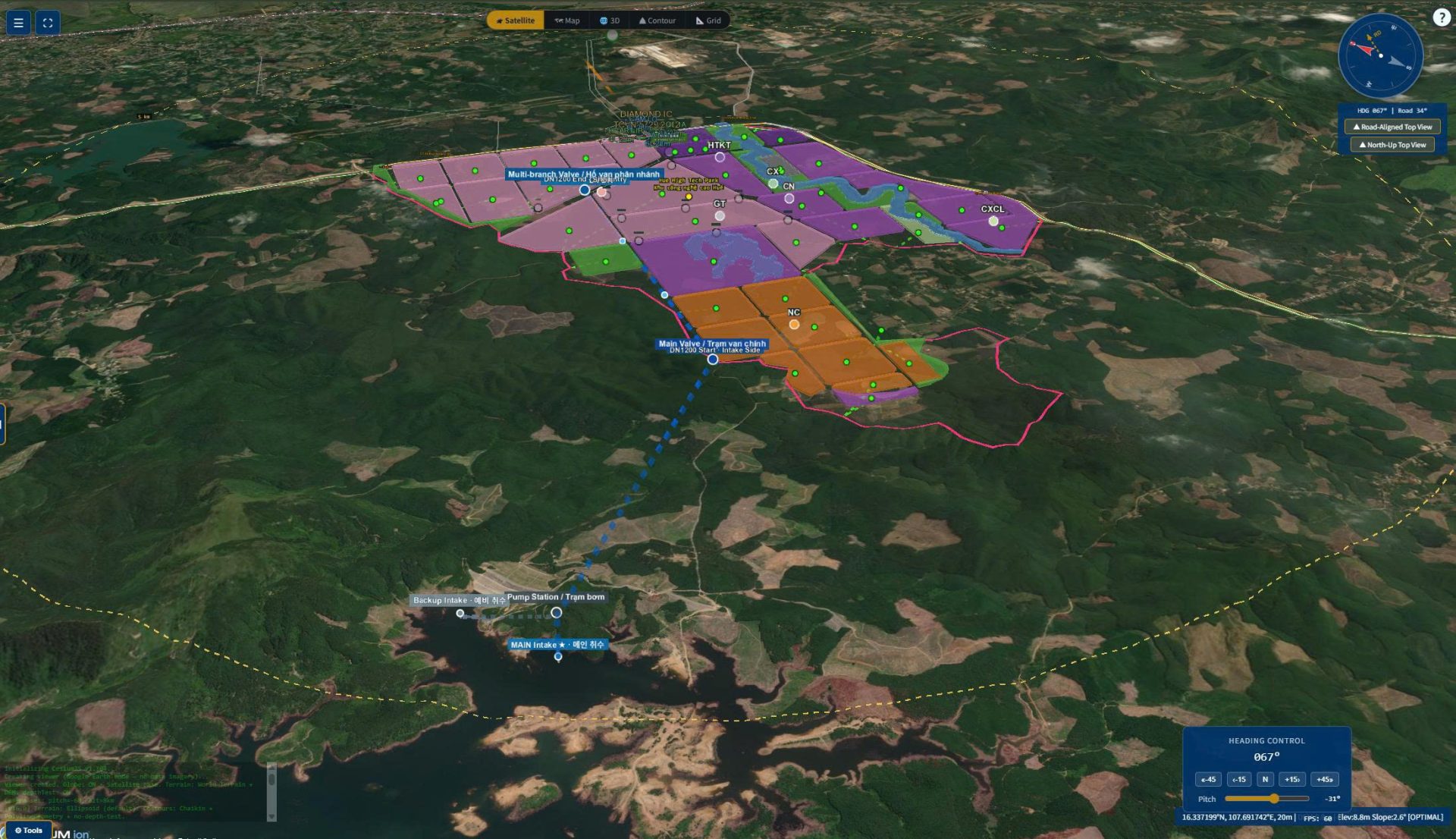
- Project-specific confirmation: By Official Letter No. 2744/SNNMT-TN dated 20 Apr 2026, the Hue City Department of Agriculture and Environment formally confirmed that HEART HT’s abstraction requirement of 100,000 m³/day (1.157 m³/s) is fully compatible with the Ta Trach source, via auxiliary dam No. 4.
- Preliminary intake concept: pump station on the bank of the Ta Trach River downstream of the hydropower dam — no structural impact on the dam — combined with Ben Van lake (Hung Loc Commune) as a transfer/storage reservoir.
- Proximity: approximately 2 km from the park boundary.
9.3 Backup source — Truoi reservoir
To raise reliability in adverse scenarios — extended dry season, pipeline failure, maintenance outage — Truoi reservoir (Phu Loc area, useful storage approximately 60 × 10⁶ m³) is under study as a supplementary and standby source. Truoi sits on a catchment independent of the Huong River, diversifying supply and removing single-asset dependency.
10Fiber and Connectivity
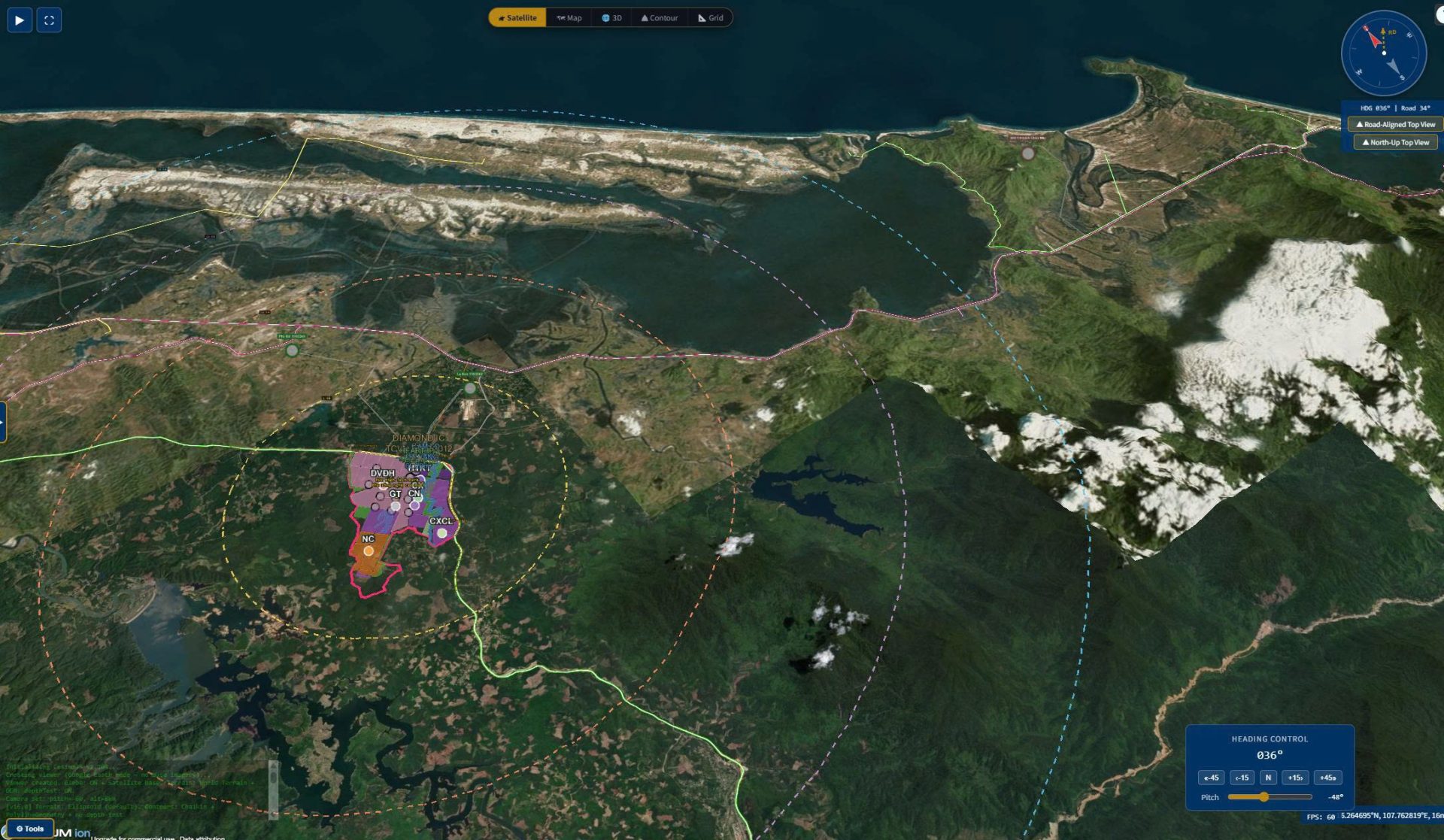
Connectivity is specified to TIA-942-C Rated-4, structured around four core requirements. Phase 1 operates at 150 MW from Q4 2027; Phase 2 (2029–2031) scales to approximately 1 GW.
| # | Requirement | Status and solution |
|---|---|---|
| 1 | Minimum two independent submarine cable systems from two separate landing stations — 10–20 Tbps for Phase 1, 100+ Tbps for Phase 2 | Available Two independent systems already land in Central Vietnam: APG at Da Nang (RTD 23 ms) and SJC2 at Quy Nhon (RTD 21 ms) |
| 2 | Two domestic routes to the landing stations on physically separate corridors | Available Both VNPT and Viettel operate independent routes (aerial and buried); the solution is to run the two carriers’ routes in parallel |
| 3 | A terrestrial multi-country route, Vietnam – Singapore | Available VNPT operates VSTN Da Nang – Singapore at 2 Tbps, expandable to 12 Tbps |
| 4 | Carrier-neutral Meet-Me Room with ROADM for a minimum of three operators, operational at least three months before COD Q4 2027 | To build Both carriers have confirmed readiness to connect into the carrier-neutral room inside the park |
VNPT and Viettel have both formally confirmed readiness to provide fibre connectivity as soon as investor demand is established — including site survey, detailed technical design, priority resource allocation and alignment with the project’s overall programme.
11Telecommunications Network — Implementation Plan
Two national carriers have confirmed in writing that they can meet the project’s connectivity requirements — Viettel (Letter 705/HUE-GPCNTT) and VNPT (Letter 1028/VNPTHUE-KTDT) — each committing to field survey and detailed design. In practice, fiber build-out typically runs ahead of power-line corridor schedules.
11.1 International connectivity — two landing stations, heterogeneous routes
- Primary gateway — Da Nang (~85 km). APG submarine cable (23 ms RTD to Singapore) · VSTN terrestrial route (39 ms — failure-mode independent of submarine systems) · ALC submarine cable (landing expected 2026).
- Second gateway — Quy Nhon. SJC2 (21 ms) · ADC.
- Capacity. Carrier-available capacity in 2027: 4.0–8.0 Tbps. Targets: Phase 1 — 10–20 Tbps; Phase 2 — above 100 Tbps. Planning density 70–130 Gbps/MW.

11.2 Park–landing-station route — procurement approach
- Two parallel tracks under negotiation with the carriers: (i) leased infrastructure — two underground dark-fiber routes direct to the Da Nang landing station, taken per wavelength or as long-term IRU; or (ii) direct investment / co-investment in the underground route with the carrier. Selection on commercial terms at negotiation, on the principles of maximum undergrounding and two physically independent routes.
- Schedule coupled to power. International capacity registration activates on approval of the power-supply scheme (submarine capacity activation ~8–10 months; domestic transmission expansion ~12 months); first registration targeted Q4 2026 – Q1 2027.
11.3 In-park redundancy and duct infrastructure — 100% underground
- Redundancy configuration. Two physically independent park entries (A/B, ≥20 m apart, different roads and structures); two carrier-neutral Meet-Me Rooms (minimum three carriers); ring-structured in-park backbone — a single cut still routes the reverse direction of the ring.
- Duct infrastructure. HDPE Ø110 duct banks — 4–6 ducts on trunk sections, 12–16 ducts (plus spares) on data-center approaches, 1–2 air-blown-fiber ducts initially; manholes ≥2.0 × 1.5 m at 50–80 m spacing; later expansion no-dig; dedicated trench, segregated from the 22 kV underground power corridor (QCVN 07-3 · 07-5). All outside-plant network in the park runs underground — applying precedent already approved at domestic technology parks.

12Expressway Access & Internal Road Network
The park is one of very few Vietnamese high-tech sites with direct expressway frontage: the CT01 (Cam Lo – La Son) expressway forms the north and east boundary, and every metre of access road and the future interchange lies inside the project boundary — no third-party land to assemble, single-owner delivery.
12.1 Access secured today — permanent solution in engineering
- Phase-1 access is in service now. The existing overpass on CT01 serves Phase-1 traffic; the load-capacity survey terms of reference have been issued and a temporary strengthening plan prepared, so construction logistics can begin in 2026 — per Report 25/2026, Phase 1.1 deliberately proceeds on the existing overpass to keep the programme at full speed, with the permanent interchange delivered in parallel with or immediately after Phase 1.1, and no tolls charged on the connection.
- Being engineered for GW-scale logistics. The permanent solution — a four-lane grade-separated interchange with an approach bridge of ~200 m, structurally rated for super-heavy haulage of 200 tonnes and above (220/500 kV transformers and large plant) — is in engineering now, on the basis of the external-connection study completed 31 Aug 2026.
- All within the boundary. The connecting roads and the interchange sit inside the project boundary, so land, design and construction are delivered under one hand.


12.2 Delivery path — mapped, funded and precedent-backed
- Approval route mapped, correspondence ready. Expressway connection approval runs Ministry of Construction → Directorate for Roads of Vietnam → Road Management Unit II (Decree 241/2026/ND-CP; connection agreement per Art. 27, Decree 165/2024/ND-CP). The full technical study is complete and the registration correspondence pack is ready to file.
- Fast-track channel identified. The CT01 La Son – Hoa Lien section toward Da Nang is being widened to four lanes right now — attaching the interchange works to that live programme is the identified fast-track, with City-level coordination.
- Investor-funded, ready to execute. HEART stands ready to build the interchange directly, with funding available immediately on assignment, under the customary cost-offset practice (deduction against land rent, taxes and fees). This is the proven Vietnamese model: at the Hau Giang biomass power plant and at the Vinh Tan power centre / Pacific general port, investor-delivered connector roads and junctions achieved schedule certainty and were handed to the authorities on completion.


12.3 Preparation status and internal road network
| Step | Content | Status |
|---|---|---|
| ① Technical study | External-connection study package (31 Aug 2026): interchange typology, super-heavy design criteria, reference procedure / time / cost | Complete |
| ② Central correspondence | Connection registration pack via MOC → DRVN → RMU II | Ready to file |
| ③ Widening-programme attachment | Attach the interchange to the live La Son – Hoa Lien four-lane widening — City coordination | Coordination scheduled |
| ④ Connection agreement | With the road authority — interchange position and design prepared for agreement | Prepared |
| ⑤ Haul-route survey | Bridge load capacity, clearances, temporary strengthening (ToR issued); super-heavy permit procedure drafted | ToR issued · permits drafted |
13Site and Ground Conditions
13.1 Topography
Of the 1,081 ha, approximately 700–800 ha is topographically straightforward to develop; the remainder is upland and natural water body retained for landscape value. Approximately 79.5% of the site lies in the 5–30 m elevation band on competent granite bedrock, giving a bearing safety factor of 15–50× data center requirements — the condition that underpins siting PK-2 heavy loads here.
| Elevation band | Share of survey points | Cumulative | Terrain character | Buildability |
|---|---|---|---|---|
| 0 – 5 m | 0.4% | 0.4% | Low-lying — landscape and water use, excluded from platforms | Budgeted earthworks where developed |
| 5 – 10 m | 11.7% | 12.1% | Low ground along streams | Requires ground improvement |
| 10 – 15 m | 19.1% | 31.2% | Gentle slope | Buildable |
| 15 – 20 m | 23.2% | 54.4% | Priority development area | Optimal |
| 20 – 25 m | 25.1% | 79.5% | Priority development area | Optimal |
| 25 – 30 m | 13.2% | 92.7% | Low hills, moderate relief | Buildable |
| 30 – 50 m | 4.9% | 97.6% | Moderate hills | Constrained |
| 50 – 65 m+ | 2.4% | 100% | High hills, green belt | Not built on |
13.2 Geotechnical, hydrology and climate
Geology
Paleozoic and Mesozoic intrusive complexes with Cenozoic fluvial, fluvio-marine and marine sedimentary units — limestone, clay, sandy clay, sand, kaolin and gravelly sandy clay. No geological faults cross the planning area. Ground conditions are generally suitable for high-rise construction.
Climate
Tropical humid monsoon. Two seasons: dry from March to August, wet from September to February. Mean temperature 25 °C; annual rainfall 2,800–3,400 mm.
Hydrology
Dense network of rivers and channels. The Song Nong rises in the low hills and runs through the centre of the commune, with major tributaries (Khe Ngang, Khe Chua, Khe Trai, Khe Bong, Khe Son). Ben Van lake contributes approximately 20 ha of surface water.
Corrosion environment
Distance to the coast exceeds 20 km — above the ASHRAE A2 salt-corrosion threshold. Electronics sited more than 15 km from the sea do not require special corrosion protection, reducing equipment maintenance cost by an estimated 15–20% over a 20-year life relative to a coastal location.
| Layer | Engineering basis |
|---|---|
| ① Flood-relief canal network | Perimeter and internal flood canals sized to the 1/1,000-year extreme flood (HHFP-P1-RWS-003) intercept upstream catchments and route extreme flows around — never across — the development platforms. |
| ② Controlled cooling-water flow routing | Process and cooling water enters and leaves the platforms only through engineered, valved conveyance routes (twin independent Ta Trach · Truoi raw-water lines and dedicated return channels) — no uncontrolled watercourse touches a data hall platform. |
| ③ Upstream Ta Trach dam — hydropower-dam class | The Ta Trach dam (646 million m³, first-class civil work, largest earth dam in Southeast Asia at completion) is one of Viet Nam’s four especially important dams (PM Decision 124/QĐ-TTg) and a work of importance to national security (Decision 166/QĐ-TTg), its structure verified to the 1/1,000-year check flood under the PM-issued Huong-basin operating procedure (1606/QĐ-TTg) — active upstream regulation that attenuates extreme events before they reach the park catchment (in 2020 it kept Hue ~1.1–1.2 m shallower). |
| ④ Professional dam operation | The reservoir is operated by Ta Trach Irrigation Works Exploitation Co., Ltd — the operating manager under the Ministry of Agriculture and Environment (converted from Irrigation Board 5 on 01/7/2026) — a single-purpose professional dam operator with which the Investor cooperates on intake works and agreed dry-season/flood-season operating priorities (Document 58/CV). |

13.3 Existing land use and population
- Hung Loc Commune was formed on 1 July 2025 by merging Loc Son town and Loc Bon and Xuan Loc communes. Population approximately 32,586 across 95.62 km² — density approximately 341 persons/km², low to moderate. 17 hamlets and one village.
- Employment: of 32,586 workers, approximately 80% are in non-agricultural sectors and 20% in agriculture, forestry and fisheries.
- Existing cover: production forest plantation with the Ben Van resettlement lake (~20 ha) — suited to an ecological landscape strategy.
- Resettlement: per the 1:10,000 cadastral review (Loc Bon, 2026), approximately 180 households concentrated in Ben Van, Duong Loc and Hoa Loc hamlets. No mass relocation is required, and site formation cost is marginal relative to comparable parks — the report contrasts this explicitly with the land acquisition difficulties experienced at Hoa Lac HTP. Local residents are targeted for retraining and occupational transition into the park.
14Development Roadmap and Business Plan
14.1 Positioning
The park is proposed as a multi-sector, open-format high-tech park with the AI data center as core infrastructure — not as an ancillary item. The report states plainly that this model has no precedent in Vietnam. It is positioned as a national-grade high-tech park under the Hue City People’s Committee, with one-stop licensing within 90 days.
14.2 Strategic roadmap
| Stage | Period | Focus | Committed milestones |
|---|---|---|---|
| G1 — Foundation | 2025–2027 | Sign 1–2 anchor tenants for hyperscale infrastructure leasing (100 MW+); establish the one-stop legal mechanism | Anchor investor MOU signed; Phase 1 land handover of approximately 100–200 ha |
| G2 — Expansion | 2028–2031 | Robotics R&D district; on-demand compute leasing for enterprises and Hue University; attract 3–5 further data center and robotics investors | 300 MW of data center in operation; 10+ robotics companies; 2,000+ high-skill technical jobs |
| G3 — Full build | 2032+ | Fully integrated AI data center + robotics + biotech park; national data center; AI–robotics start-up ecosystem | 500 MW+ of data center; top-3 in ASEAN for large-scale AI infrastructure leasing |
14.3 Implementation phasing
Approvals
Complete the procedures for submission to the Ministry of Science and Technology and the Prime Minister for approval of the establishment scheme.
Master plan and Step 1 land (200 ha)
- Master plan for the park at Hung Loc Commune; boundary marker installation; master plan approval
- Step 1 area: 200 ha, to be confirmed at the land-use-right allocation stage under the Land Law. Effective delivery of Step 1 conditions approval of subsequent steps.
- Infrastructure design and construction to the fence line: the main access road from the La Son – Tuy Loan Expressway to the park gate, power lines and water mains
- Management Board operations building
- Landscape planting programme and ornamental plant propagation
Human capital and national laboratories
- Priority delivery of the high-tech workforce development project
- Joint training programmes in IT and biotechnology — capable of supplying high-tech personnel from 2028
- Establish two national key laboratories in IT and biotechnology
- Build up software and IT enterprises, biotechnology firms using indigenous raw materials, and high-tech pharmaceutical producers
- International investment promotion targeting foreign high-tech enterprises
Step 2 — expansion to 500 ha
- Step 2 area increases from 200 ha to 500 ha
- Complete platform works across the functional zones
- Scale up the infrastructure company’s capacity to meet investor demand
- Admit only enterprises producing high-tech products
14.4 Priority sectors
To 2030
Information technology (including the AI data center), biotechnology, and high-tech applications in medicine and pharmaceuticals.
Post-2030
Adds semiconductors, AI, IoT, electronics and informatics, energy, new materials, pharmaceuticals, computer and office equipment, communications equipment and scientific instruments. Robotics and automation runs across both horizons as a designated national strategic technology.
Workforce target: 10,000 digital-sector personnel engaged in high-tech and strategic-technology production and business in the park by 2030.
15Phased Implementation Plan — 40/30/30 · September 2026
This section consolidates the phased implementation plan reported to the Chairman of the Hue City People’s Committee in September 2026 (Report “Kế hoạch thực hiện phân kỳ Khu công nghệ cao thành phố Huế”). Area and budget figures are provisional allocations at a 40/30/30 ratio; definitive figures will be fixed in the 1/2,000 zoning plan and the Feasibility Study.
15.1 Why Hue — five siting conditions, met simultaneously
Hyperscale AI data centers are not sited on land rent; they are sited on five conditions that must all be in place at the moment of the investment decision. Several Vietnamese provinces moved earlier on policy, yet none operates a hyperscale AI data center — because the five conditions were never met at once. Hue meets all five:
Phase 1: 40 MW from two independent 110 kV substations (La Son and Phu Bai 2 IP), each registered for the full 40 MW — 100% mutual backup, meeting Rated-4 (ANSI/TIA-942-C). Phase 2: ~150 MW via 220 kV. Post-2030: in-project 500/220 kV substation. The 500 kV / 220 kV transmission corridor crosses the area — no new line corridor required.
Within the existing 2.0 m³/s licence of the Ta Trach reservoir (useful storage 409.65 million m³); two independent routes (Ta Trach · Truoi); hybrid evaporative-plus-recirculation design for the dry season.
Da Nang (~85 km) and Quy Nhon; heterogeneous submarine and terrestrial routes; two carriers have confirmed capability in writing, with 4–8 Tbps available in 2027.
A single contiguous parcel, 955.53 ha of production forest, low resettlement count — wide enough for modular data center build-out to GW scale on one site.
Distance from the coast limits salt corrosion of cooling plant and servers; direct access to the CT01 expressway and to Phu Bai and Da Nang international airports.
Global big tech, US-export-approved neo-cloud providers and top-tier global data center operators — the only groups able to bring latest-generation AI chips into Vietnam. Their entry threshold is 40 MW+ with a GW expansion path on a single site at Rated-4/2N; small, non-expandable plots do not qualify.
15.2 Phasing structure — three phases, Phase 1 split 1.1 / 1.2
- Layout. The 1,081 ha area divides into four sectors: Phase 1.1 in the north-east, adjoining the main transport axis (started first); Phase 1.2 at the centre; Phase 2 in the south adjoining La Son IP; Phase 3 in the remaining west.
- Division criteria. ① spread the compensation and site-handover workload; ② sequence access to external utility tie-in points (power – water – telecom – roads); ③ bring initial demand (AI data center, technology zone) into operation early.
| Phase | Period | Provisional area | Provisional budget | Funding source |
|---|---|---|---|---|
| 1.1 | 2026 | ~262 ha (24%) | USD 50.0 m | 2026 own equity — incl. USD 30.04 m compensation, support and resettlement cost borne entirely by the Investor (no land-rent offset requested) |
| 1.2 | 2027 | ~170 ha (16%) | USD 76.1 m | After financial close, combined with debt |
| Σ 1 | 2026–2027 | ~432 ha (40%) | USD 126.1 m | 2026 equity + 2027 debt |
| 2 | 2028–2030 | ~324 ha (30%) | USD 94.6 m | After financial close, combined with debt |
| 3 | 2031–2032 | ~324 ha (30%) | USD 94.6 m | Subject to phase-transition criteria |
| Total | 2026–2032 | 1,081 ha (100%) | USD 315.3 m | Committed total per Official Letter 17/2026/CV-HEART |

15.3 Two-pillar structure and investor commitment
- Pillar A — trunk infrastructure (PPP–BOT). USD 315.3 m, 100% private capital, no state capital and no government guarantee; 25-year operation, contract end 01 Jan 2052; equity ≥ 30% / debt ≤ 70%; financial close within 12 months of contract signing; performance security 1–3% accepted.
- Pillar B — AI data center (separate project under the Investment Law). Phase-2 scale USD 2,330 m (above the VND 30,000 bn special-incentive threshold, Art. 20 Investment Law); debt : equity 70 : 30; sustainability targets — PUE 1.28 and 100% renewable energy by 2030. Financial reference indicators are disclosed to NDA + KYC counterparties only, through the secured data room (§16).
- Single counterparty, clean structure. The PPP project enterprise is established and 100%-owned by HEART HT; the Investor and the project enterprise together form one contract party with the People’s Committee (PPP Law Art. 49.2). Strategic partners participate through capital contribution or share purchase in HEART HT, and the executed NDAs and letters of commitment remain effective, to be completed and supplemented before FS approval (Report 25/2026).
- Acting ahead of approval. USD 50.0 m own budget deployed in 2026, of which USD 30.04 m is the full compensation, support and resettlement cost — borne entirely by the Investor inside the USD 315.3 m total investment, with no land-rent offset requested, preserving the project’s 100% private-capital character (Report 25/2026). The entire USD 50.0 m is contributed and disbursed as paid-in equity following completion of the charter-capital increase; debt is drawn only from 2027 after financial close.

15.4 Anchor pipeline and activation sequence
- Target group. Six global neo-cloud providers (US GPU-export-approved), operators from the global top-10 data center group currently site-hunting in Vietnam, and six Anchor candidates (global big tech, HQ in the US and Asia–Pacific).
- Current status (anonymised under NDA). KYC packs issued to prospective customers; NDAs signed with multiple parties; several parties in site due diligence; three of six Anchors have received site information over an extended period.
- Majority-role screening. One major candidate in the power/energy sector oriented to a majority role in the power component, and one major candidate in the AI DC sector oriented to a majority role in the AIDC component, have been screened at central-government circulation stage. Both remain candidates; identities are withheld under NDA and may be replaced by third global operators.
| Step | Content | Actor |
|---|---|---|
| 1 | Announcement of the Establishment Decision of the Park | Hue City People’s Committee |
| 2 | Anchor confirms investment intent — activation condition | Global technology group |
| 3 | DEPC contractor and Operator formally register, meeting security · capital · technology · track-record requirements | International contractor / operator |
| 4 | Invitation to ecosystem companies of the global technology group (excl. power – water – land – buildings) | Coordinating investor |
| 5 | Final investment decision — contract execution and capital contribution | All parties |
16Capital Structure — Pillar A and Pillar B
The project is capitalised in two separate pillars, with different balance sheets, different corporate vehicles, different investor sets and different procurement routes. Pillar A is the park’s shared trunk infrastructure, delivered under a PPP/BOT contract using no state capital. Pillar B is the AI data center itself, funded by the data center operator and its own capital stack, outside the PPP contract. Construction opportunity exists in both — but the contracting counterparty is not the same.
| Dimension | Pillar A — PPP/BOT trunk infrastructure | Pillar B — AI Data Center |
|---|---|---|
| Physical scope | Site formation, internal and external roads, power source, substations and HV lines, water supply, wastewater and large-scale cooling water, fibre and shared digital infrastructure, lighting, landscape and fire protection — across the whole 1,081 ha | Data center core & shell, electrical and mechanical systems, liquid cooling plant and the IT hardware estate — inside PK-2 (319.52 ha) |
| Capital | USD 315.3 m committed programme — compensation, support and resettlement included (Report 25/2026) | Operator capital at hyperscale; ~1,000 MW target at full build |
| Vehicle | Project SPC under a BOT contract of 25–30 years; PPP Law No. 64/2020/QH14 as consolidated; no state capital | Operator or anchor-tenant balance sheet, co-development JV, or lease of powered land — commercial, outside the PPP contract |
| Capital sources | 100% private capital — equity ≥ 30% : debt ≤ 70%; no state capital in any form, no Government guarantee (Report 25/2026) | Data center operator / anchor tenant / neocloud operator and its own lenders, sponsors and equipment financiers |
| Procurement | Investor appointment under Articles 11(4) and 39(1)(đ) of the PPP Law; procedure per Article 27 of Decree 243/2025/ND-CP | Private commercial procurement run by the operator on its own terms |
| Delivery interface | Owner’s PM/CM, design and construction of the trunk works, staged GMP packages tied to the power gates | Design-build or CM-at-Risk for the data center modules; specialist MEP and liquid cooling; repeat module delivery |
| Schedule driver | Phase 1 power, main access road, water intake and trunk fibre — all must precede COD | Q4 2027 COD for the first ~100 MW hall; subsequent modules follow the power tranches |
Committed programme, 100% private capital. Equity ≥ 30% of total investment (≥ USD 94.6 m — more than twice the statutory minimum), debt ≤ 70%, financial close within 12 months of contract signing, performance security 1–3%. No state capital in any form and no Government guarantee (Report 25/2026, §20.2).
A separate project under the Investment Law, funded by the data center operator and its own capital stack, outside the PPP contract. Phase-2 reference scale USD 2,330 m (§15.3); ~1,000 MW target at full build. Investor incentives: §17.
16.1 Why the two-pillar split matters commercially
- Leverage sits in Pillar A. At approximately USD 300 million, Pillar A is around 2% of the capital stack it unlocks at the 100 MW module level — and a precondition for all of it. Power, water and fibre delivered on programme are what convert the site from land into contracted capacity.
- Risk profiles differ. Pillar A carries land, permitting, utility-interface and long-tenor availability risk under a 25–30 year BOT. Pillar B carries technology-obsolescence, tenant-credit and utilisation risk on a much shorter asset life.
- Contracting counterparties differ. A delivery partner may hold a role in one pillar, both pillars, or a coordinating role across the interface. The interface itself — where trunk infrastructure hands over to the data center module — is where most schedule risk concentrates.
- Scale asymmetry is the negotiating fact. Ten modules at the 1,000 MW target imply a Pillar B stack roughly two orders of magnitude larger than Pillar A. The park’s value is not in its own CAPEX; it is in what that CAPEX makes buildable.
17AI DC Investor Incentives · Law 133/2025/QH15 · Decree 260/2026/ND-CP
An AI data center built inside the Hue High-Tech Park (Pillar B, §16) sits under the new high-tech regime in force since 1 July 2026 — High Technology Law No. 133/2025/QH15, Decree No. 260/2026/ND-CP, and the lists of strategic and high technologies (Decisions 21/2026/QĐ-TTg and 23/2026/QĐ-TTg). The regime works in layers: a location-based package that every new project in the park receives without any enterprise certificate; a treatment that the Law names specifically for AI data center projects; certificate-based upgrades that extend the preferential tax period to 25 years; and cost pass-through on land that is written into the park developer’s own obligations.
17.1 The incentive stack at a glance
CIT at 10% for 15 years, 4 years exempt + 50% reduction for up to 9 more — for income from any new investment project in a high-tech park, regardless of enterprise certification (CIT Law 67/2025/QH15, Art. 13.1(d), 14.1(a)).
Enterprises implementing AI data center construction projects are expressly listed as eligible for the customs priority regime, subject to the conditions of the Customs Law (High Technology Law, Art. 25.5).
A Group-1 high-tech enterprise, a strategic-technology enterprise or an R&D centre receives CIT at 10% for 25 years, plus import-duty, procurement and customs benefits (Art. 25 Law; Art. 17 Decree 260 — 5-year certificate).
The park developer is exempt from State land rent for the whole lease term on land subleased to high-tech / strategic-tech projects, and may not price the exempted rent into the sublease (Decree 260, Art. 23.5).
Where no investment-policy approval or IRC is required, the park Management Board appraises in 15 working days and issues the confirmation letter within 1 further working day (Decree 260, Art. 28.3, 31); one-stop / inter-agency handling of investment, land, construction, environment, labour, tax and customs procedures (Art. 22.2).
High-tech personnel, including foreign nationals, receive personal-income-tax exemption as provided in the PIT law, plus training, housing and living-cost support; R&D staff receive entry, residence and work-permit preferences (Law, Art. 13.1, 16.2).
17.2 Layer 1 — location-based package (no certificate required)
These apply to the AI data center project because it is located in the park. Projects in a high-tech park include projects under the Investment Law, public investment projects and PPP projects (Decree 260, Art. 3.7).
| Incentive | Position for an AI DC investor | Legal basis |
|---|---|---|
| Location status | Projects in the park receive the incentives and support applicable to areas with especially difficult socio-economic conditions — the most favourable location tier. | Law 133, Art. 22.5(a); Decree 260, Art. 22.1 |
| Corporate income tax | 10% for 15 years; exemption up to 4 years; 50% reduction up to the following 9 years — for income from a new investment project in the park, independent of any enterprise certificate. | CIT Law 67/2025/QH15, Art. 13.1(d), 14.1(a) |
| Administrative procedure | Support for recruitment and for investment, enterprise, land, construction, environment, labour, tax and customs procedures on a one-stop / inter-agency one-stop basis, within the powers delegated to the Management Board by ministries and the City. | Decree 260, Art. 22.2, 32, 33 |
| Programmes & sandbox | Priority access to State science-and-technology programmes on high and strategic technology, to controlled testing (regulatory sandbox), and to venture-capital funds — relevant to AI platform, sovereign-cloud and data-service pilots. | Law 133, Art. 22.5(đ); Decree 260, Art. 22.3, 25.3 |
| City-level support | The City People’s Council may adopt its own support policies and levels for investment in the park. | Decree 260, Art. 22.4 |
17.3 Layer 2 — the AI data center treatment and the eligibility pathway
AI data center construction projects — customs priority regime
Article 25.5 of the High Technology Law extends the customs priority regime to high-tech and strategic-technology enterprises and, by name, to enterprises implementing AI data center construction projects, semiconductor-chip projects and key digital-technology product projects — provided the conditions of the Customs Law are met. For an AI campus whose capital stack is dominated by imported GPU/server estate, power and cooling plant, customs handling sits directly on the critical path to COD.
Project eligibility in the park
- The project must fit the park’s mission and meet the general and type-specific criteria — R&D centre, incubator, or provision of high-tech / strategic-technology services, with the service on the applicable List (Decree 260, Art. 26).
- The AI DC is positioned as technology infrastructure — computing and data infrastructure, digital platform and controlled test environment (§5). Mapping of the specific service lines to Decisions 21/2026 and 23/2026 is confirmed project by project.
Confirmation — how fast
- Where the project does not require investment-policy approval or an IRC, the Management Board appraises within 15 working days of a complete dossier and issues the confirmation letter within 1 further working day (Decree 260, Art. 28.3, 31).
- The confirmation letter is also the trigger for the developer to sublease the land (Art. 23.3) — see §17.5.
17.4 Layer 3 — certificate-based upgrades for the AI DC operating company
If the AI DC project company (or its R&D arm) obtains a confirmation as one of the enterprise types below, the location package is upgraded. Certificates are valid for 5 years (Decree 260, Art. 17).
| Enterprise type | CIT | Other benefits | Criteria / conditions |
|---|---|---|---|
| Group-1 high-tech enterprise · strategic-technology enterprise · high-tech / strategic-tech R&D centre | 10% for 25 years; exempt up to 4 yr; 50% reduction up to 9 yr | • Import duty exempt for 5 years on raw materials, supplies and components imported for production and research (Law, Art. 25.6); exempt on specialised equipment and supplies for high-tech / strategic-tech R&D (Decree 260, Art. 4.2(a), 5.2(a)) • Customs priority regime (Law, Art. 25.5) • Procurement preference in contractor and investor selection; no obligation to prove equity (Law, Art. 25.3) | Quantitative criteria — Decree 260, Art. 15, 16. Strategic-technology enterprise: ≥ 51% domestic ownership, unless the Prime Minister decides otherwise (Law, Art. 15.6) |
| Group-2 high-tech enterprise | 10% for 15 years; exempt up to 4 yr; 50% reduction up to 9 yr | Decree 260, Art. 14 | |
| High-tech product manufacturer | 17% for 10 years; exempt up to 2 yr; 50% reduction up to 4 yr | Same import-duty, customs and procurement benefits | Decree 260, Art. 13 — typically less relevant to an AI DC operator |
| High-tech / strategic-tech R&D centre — land | Exempt from land rent for the entire lease term | Decree 260, Art. 9.3(a) | |
17.5 Land, lease and cost pass-through
- Who leases from whom. The AI DC investor subleases land from the park infrastructure developer (Decree 260, Art. 9.3(a)). The park is a no-State-budget park (§15.3, §16): the State leases the land to the developer, which subleases developed land; for projects that must meet the Art. 26 criteria, sublease follows the project’s confirmation letter (Art. 23.3).
- Land rent exempted at developer level. After the construction-period exemption, the developer is exempt for the whole lease term on area subleased to high-tech and strategic-technology projects, and exempt for 15 years with a 50% reduction thereafter on other area (Art. 23.5).
- Pass-through written into the rule. The developer may not include the exempted or reduced land rent in the sublease price (Art. 23.5), and the sublease price framework is registered with the Management Board (Art. 29.8). The AI DC tenant therefore does not carry State land rent on qualifying area.
- Priority of law. Where high-technology law differs from land law, high-technology law prevails (Decree 260, Art. 44).
- Tenure. The AI DC runs on a 50-year high-tech track (§1); Pillar B’s phase-2 reference scale is above the VND 30,000 bn special-incentive threshold of Art. 20 of the Investment Law (§15.3), which is a separate track.
17.6 Talent, R&D and financing support
People
- High-tech personnel, including foreign nationals: PIT exemption as provided in the PIT law; support for training, housing and living costs under the employment contract (Law, Art. 13.1; Decree 260, Art. 35, 36).
- R&D staff of high-tech / strategic-tech enterprises: preferences on entry, exit, residence and work permits (Law, Art. 16.2).
- Leading strategic-technology experts: market-negotiated salary, bonus up to 6 months’ salary a year, PIT exemption — high-tech and strategic-tech enterprises may apply the same policy (Decree 260, Art. 37, 38).
- Staff may rent housing outside the park and have purchase priority on indefinite contracts; temporary residence with family in on-park accommodation (Art. 24.3, 30).
R&D and financing
- Up to 100% funding of State-commissioned high-tech / strategic-tech tasks (Decree 260, Art. 4, 5).
- Interest-rate support for up to 5 years: 70% of interest, capped at 8% p.a., for high-tech; 100%, capped at 10% p.a., for strategic technology (Art. 4, 5).
- High-tech / strategic-tech start-ups: 100% waiver of fees for national key laboratories for 3 years, 50% thereafter; priority access to venture capital (Art. 11.2).
17.7 Conditions, obligations and points to confirm
| Item | Position | Status |
|---|---|---|
| Commitment discipline | A project that breaches its commitments may lose the incentives (Decree 260, Art. 27.2); the developer may admit only projects meeting the Art. 26 criteria and must monitor and report to the Management Board (Art. 27.3(d)). | Condition |
| Certificate term | Enterprise confirmations run for 5 years and must be maintained against the quantitative criteria (Art. 17). | Condition |
| Service-line mapping | AI compute, cloud, data and platform services to be mapped to the Lists (Decisions 21/2026 and 23/2026) for the specific project. | To confirm |
| Customs priority | Named eligibility for AI DC projects; access depends on satisfying the Customs Law conditions. | To confirm |
| Regime selection | Where several CIT regimes could apply, the elected regime is confirmed with the tax authority and the investor’s adviser. | To confirm |
| Transition | Certificates issued under Law 21/2008/QH12 remain valid, with their tax incentives, until expiry (Law 133, Art. 27; Decree 260, Art. 45.3). | In force |
18Delivery Structure — PPP / BOT
The construction, operation and transfer of the park’s technical infrastructure is to be delivered under a public–private partnership using a BOT contract of 25–30 years, financed entirely from non-budget sources. This is a PPP project using no state capital under Articles 70, 71 and 72 of PPP Law No. 64/2020/QH14 (as amended and consolidated at Document No. 81/VBHN-VPQH dated 26 March 2026). All capital is arranged by the private investor; no form of state capital is used.
18.1 Scope of the PPP project
The full set of shared technical infrastructure for the park (approximately 1,081 ha at Hung Loc Commune, per the approved plan):
- Site formation, ground preparation and framework technical infrastructure
- Internal road network and external traffic connections
- Power supply — sources, substations and high-capacity transmission lines serving the data center load
- Water supply, drainage and wastewater treatment; large-scale water supply and cooling systems
- Telecommunications, multi-source multi-route fibre and shared digital infrastructure
- Lighting, landscape, fire protection and other shared infrastructure per the master plan
18.2 Investment phasing under the contract
| Stage | Content |
|---|---|
| Phase 1 (priority) | Essential infrastructure to bring the AI data center zone and the first loads into operation — initial power source and supply, main traffic spine, water supply and cooling, and trunk fibre. |
| Phase 2 (expansion) | Increase supply capacity — additional 500/220 kV substation and independent standby power source — and complete the park-wide technical infrastructure per the master plan. |
Programme, scale and boundary of each phase are fixed in the feasibility study report and the project contract.
18.3 Procurement route
| Element | Position |
|---|---|
| Investment policy decision | Not required. As an investor-proposed PPP project using no state capital, the project is exempt under Article 11(3)(a) of the PPP Law. |
| Investor selection | Investor appointment under the procedure in Article 11(4) of the PPP Law, in the case set out at Article 39(1)(đ) — “a project requiring accelerated delivery, promoting socio-economic development and safeguarding national interests, proposed by an investor and approved by the competent authority”. |
| Justification — schedule | Technical infrastructure must complete in step with the AI data center to meet time commitments to the anchor tenant and hyperscale cloud provider, and to capture the regional competitive window for AI and data infrastructure investment. |
| Justification — socio-economic | Job creation, formation of a high-tech ecosystem, socio-economic development of Hue City and the region, and attraction of high-quality FDI. |
| Justification — national interest | The project is strategic digital and AI infrastructure contributing to national data sovereignty, aligned with Politburo Resolution 57-NQ/TW dated 22 December 2024. |
| Procedure | Per Article 27 of Decree 243/2025/ND-CP dated 11 September 2025 and the process at Article 11(4) of the PPP Law: (a) investor submits a proposal with justification, feasibility study report, capability dossier and draft contract; (b) competent authority appraises the FS, approves the project and the appointment result; (c) contract signature and implementation. |
18.4 Technical qualification requirements
The report states expressly that the park’s technical infrastructure directly serves high-tech operations and the AI data center and carries exceptional technical requirements: high-capacity, high-reliability power source and transmission with redundancy targeting N-2 and Rated-4 reliability; multi-source, multi-route, high-capacity fibre with uninterrupted redundancy; large-scale water supply and cooling; and other works to advanced technical standards. Because of this specialised technical character and the need for full coordination, the project requires an investor with the professional capability, track record and integrated solution to match.
19Market Context — AI Infrastructure Unit Economics
The following third-party market data points are provided as external context for the scale and revenue density of AI data center capacity. They are not project forecasts and do not form part of the establishment report.
| Metric | CoreWeave | Nebius |
|---|---|---|
| Contracted power capacity | 1.85 GW (operating basis, year-end) | 5.0 GW (raised from 4 GW) |
| Annualised recurring revenue | USD 19.5 billion (year-end) | USD 12–15 billion estimated year-end; USD 3 billion ARR passed as at end-June |
| AI data center revenue growth | — | +514% year on year |
| Annual contract value per MW | ≈ USD 10.54 million | ≈ USD 20 million average; recent contracts reported up to USD 40–50 million |
| Indicative payback | ≈ 3 years | 1–3 years, driven by the higher per-MW rate |
19.1 Read-across
- Per-MW annual contract value is the metric that determines whether AI data center capital is recoverable. At the reported USD 20 million per MW average, capacity is being contracted at roughly double the level of the earlier generation of operators.
- Applied to the Hue programme purely as an order-of-magnitude reference, the ~1,000 MW AI data center target sits in a capacity band where operators are currently contracting multi-billion-dollar annual revenue. The determining constraints are the ones this document sets out: power at scale, water at scale, diverse fibre, and schedule certainty.
- This is precisely why the master plan treats the AI data center as the anchor and sizes the 500/220 kV head-end, the 100,000 m³/day water strategy and the Rated-4 connectivity around it, rather than the reverse.
20Approvals & Execution Status — Systematic De-risking
20.1 Register — current evidenced position
Every material item on the programme is identified, owned and moving. The September 2026 filings advanced the register decisively: the grid-connection dossier and the PDP8 pre-feasibility dossier are on file, water and carrier confirmations are in writing, and the 2026 budget is committed. The table below states each item and its current, evidenced position — and the thirteen standing commitments in §20.2 are what convert this register into an accelerable programme.
| Item | Status | Current position — evidence on file |
|---|---|---|
| City leadership alignment | Affirmed | At the Chairman’s working sessions of 14 and 16 Sep 2026 (Invitation 936/GM-UBND) the Chairman of the People’s Committee concluded that the project is consistent with the orientation of the Party and the State, and that the City will work with the ministries and issue the decision selecting a fully capable, fully qualified investor. The Investor’s consolidated response is on file as Report 25/2026/BC-HEART (18 Sep 2026). |
| PDP8 amendment — 500/220 kV | Dossier filed | The pre-feasibility dossier for two 500/220/110 kV substations and 500 kV tie-lines was filed on 11 Aug 2026 per MOIT appraisal criteria (Official Letters 14/2026 and 18/2026/CV-HEART), and the project is carried on the City’s priority grid list (150 MVA 2026–2030 · 1,400 MVA 2031–2035). EVNCPC identified this as the key item for large secondary investors, and the Investor has proposed to fund both 500 kV substations itself. See §7.6, §8.2. |
| Phase-1 power configuration | Filed · Rated-4 | The 22 kV connection dossier was submitted 28 Aug 2026: 40 MW from two independent 110 kV substations, each registered for the full load — 100% mutual backup over physically separate corridors. The temporary-supply plan is agreed with Hue PC and EVNCPC, and the load-commitment package (take-or-pay on registered capacity, bank guarantee/LC, staged BESS) is on file as CV 24/2026. Supersedes the earlier shared-segment concept. See §8.1, §8.3. |
| Chan May 220 kV upgrade | Scheduled | Two 250 MVA units are envisaged to 2030 and the project sits on the City’s priority grid list; connection-demand registration with EVN / EVNNPT runs in parallel with the dossier already filed. See §7.5. |
| Aviation corridor | In coordination | Flight-path coordination with the aviation authority is in progress; PK-2’s 319.52 ha gives generous siting flexibility for data-hall placement while coordination concludes. |
| Water — volume and delivery | Secured | The full 100,000 m³/day demand sits inside the existing 172,800 m³/day licence with a project-specific written confirmation (2744/SNNMT-TN); the delivery works — intake, transmission main, Ben Van storage and the Truoi redundancy link — are scoped in the FS, and on 16 Sep 2026 the reservoir operator confirmed the minimum regulated flow of ~150,000 m³/day secures the full requirement. See §9. |
| Statutory approvals | On schedule | Provincial plan (A1) — complete. Establishment scheme (A2) — in appraisal. Establishment scheme circulated to four ministries for opinion by the City on 24 Jul 2026 (11067/UBND-KHCN). For the 1/2,000 zoning plan (A3), the Investor has proposed — and committed funding for — preparing the Phase-1.1 zone plan under City assignment, holding the 2026 / early-2027 start; the phasing petition was filed 26 Aug and the FS authorisation letter has been requested. See §15, §20.2. |
| Land & resettlement | Funded & phased | Delivery follows the 40/30/30 phasing plan with USD 50.0 m own budget committed for 2026, including the USD 30.04 m compensation, support and resettlement cost borne entirely by the Investor with no land-rent offset requested. ~180 households, low settlement density — among the most straightforward land positions of any Vietnamese HTP. See §15. |
| Carrier-neutral Meet-Me Room | Carrier-backed | Viettel and VNPT have both confirmed capability in writing (Letters 705 and 1028) with survey and detailed-design commitments; the MMR is programmed live at least three months before COD. See §11. |
| UXO & earthworks | Budgeted | VND 15 bn for UXO clearance and VND 200 bn for site formation are carried in the CAPEX; the 12.1% of the site below 10 m is reserved for landscape and water use, outside the platforms. |
20.2 Thirteen standing commitments of the Investor — Report 25/2026
| No. | Commitment | Basis |
|---|---|---|
| 1 | 100% self-arranged capital for the full USD 315.3 m; no state capital (PPP Law Arts. 70, 72); no Government guarantee | CV 17/2026 |
| 2 | Equity ≥ 30% of total investment (≥ USD 94.6 m — more than twice the 15% legal minimum); debt ≤ 70%; financial close within 12 months of contract signing | CV 17/2026 · PPP Law Arts. 76–77 |
| 3 | Performance security of 1–3% of total investment, independent of project investment outlays | CV 17/2026 · PPP Law Art. 48 |
| 4 | USD 50.0 m own equity deployed in 2026 / early 2027, ahead of financial close — including USD 30.04 m compensation, support and resettlement borne entirely by the Investor, no land-rent offset requested | CV 17/2026 |
| 5 | Self-funded grid works, handed to EVNNPT on completion | CV 24/2026 |
| 6 | Minimum take-or-pay on registered capacity of each phase (orientation 60–70%), independent of actual usage; two-part tariff; bank guarantee / letter of credit | CV 24/2026 |
| 7 | Four-layer oscillation absorption and staged BESS; each load step starts only after the previous step passes grid-impact verification | CV 24/2026 |
| 8 | No tolls on the expressway connection; ready to build the interchange directly (or jointly) and hand it to the locality | Session of 16 Sep 2026 |
| 9 | 100% of the ~60 km internal road network at Investor cost | BC 23/2026 |
| 10 | Replacement-forest payment for the converted forest area, per regulation | BC 23/2026 |
| 11 | Cooperation with Hue University and training institutions on AI and semiconductor talent, to international data-center operations standards | Session of 16 Sep 2026 |
| 12 | Financial-capability dossier (post-increase equity and allocations for land clearance, substations and roads) submitted before FS approval | Report 25/2026 |
| 13 | Preparation and funding of the Phase-1.1 zone 1/2,000 plan, if assigned by the People’s Committee | Report 25/2026 |
21Indicative Delivery Partner Scope and Next Steps
This section is indicative and for discussion. It sets out where international construction and programme management capability maps onto the delivery structure described above.
21.1 Where the delivery challenge sits
Schedule is the binding constraint
Phase 1 COD is Q4 2027 at 150 MW, with the Meet-Me Room live three months earlier. Anchor-tenant commitments run off that date. The critical path is head-end power, the main access road, water intake and trunk fibre — all in the PPP scope.
Modular repeatability
PK-2 is designed as parallel low-rise modules on 319.52 ha, expanding from ~100 MW to ~1,000 MW. Value comes from a repeatable module design, a standing supply chain and parallel commissioning — not from one-off construction.
Specialist building types in PK-1
Class 100–10,000 cleanrooms, UPW plant, chemical distribution, GMP-WHO pharmaceutical areas and vibration-sensitive laboratories on 272.07 ha, including the 289.4 ha pilot production programme.
Flood immunity is contractual
Drainage and earthworks are designed against the 1/1,000-year extreme flood (HHFP-P1-RWS-003), and the delivery scope carries an absolute zero-inundation performance guarantee for the data center platforms as a core technical condition (§18.4), backed by the flood canals, controlled cooling-water routing, the hydropower-dam-class Ta Trach dam and its professional state-owned operator (§13.2). Flood-relief channels, platform levels and outfall works sit on the Phase-1.1 critical path.
Heavy MEP and utilities
A 3 × 900 MVA 500/220 kV station in transit connection, a 2 × 250 MVA 220/110 kV receiving station feeding HTZ-SS1–SS3, temporary 22 kV works on two corridors, liquid cooling at rack level, a 100,000 m³/day water and cooling system and a closed-loop wastewater plant — all to N-2 and Tier III/IV.
21.2 Candidate roles for discussion
- Programme management / owner’s representative across the PPP trunk-infrastructure scope, interfacing EVN, the water authority, VNPT/Viettel and the Management Board
- Design-build or construction management for the PK-2 AI data center modules, including a standard module design set for repeat delivery
- Specialist MEP delivery — HV substations, liquid cooling systems, ultrapure and cooling water plant
- Cleanroom and process facility delivery in PK-1, including the semiconductor pilot line and GMP-WHO pharmaceutical facility
- Feasibility study and contract support — the investor-appointment route requires an FS report, capability dossier and draft project contract, where demonstrated international delivery capability directly supports the appointment justification set out in §18.3
21.3 Proposed next steps
- Technical workshop on the Phase 1 150 MW package — scope split between EVN works, PPP works and tenant works
- Site visit to Hung Loc, including the 500 kV corridor, the Ta Trach intake location and the Step 1 200 ha parcel
- Schedule review against the Q4 2027 COD, identifying long-lead items — HV transformers, switchgear, cooling plant
- Commercial framework discussion — role within the BOT structure, and the interface with the anchor tenant’s own delivery programme
- Release of the detailed technical annexes — master plan drawings, single-line diagrams, geotechnical survey and the full establishment report — under the executed NDA
§Important Notice and Disclaimer
This notice forms an integral part of the document. By retaining, reading or relying on any part of this document, the recipient accepts the terms set out below.
Confidentiality
This document and all information it contains are strictly confidential and are disclosed solely under, and subject to, the executed Non-Disclosure Agreement between HEART High-Tech Joint Stock Company (“HEART HT”) and the recipient. It is provided to named recipients only. No part may be copied, reproduced, extracted, summarised, stored, transmitted or disclosed to any third party — including affiliates, advisers and sub-contractors — without the prior written consent of HEART HT. If the recipient does not wish to accept these terms, this document must be returned or destroyed and no use made of its contents.Purpose and status
This document is a preliminary introduction prepared for discussion purposes only. It is not a contract, tender document, technical specification, information memorandum or prospectus, and it creates no obligation on any party. Nothing in it commits HEART HT, the Hue City People’s Committee, any competent authority or any prospective investor to any transaction, scope, programme or price.No offer or solicitation
This document does not constitute, and shall not be construed as, an offer to sell or a solicitation of an offer to buy any security, interest, asset or service, in any jurisdiction. Any transaction would be subject to definitive documentation, all required corporate and regulatory approvals, and satisfactory due diligence by all parties.No representation, no reliance
While prepared in good faith, no representation or warranty, express or implied, is given by HEART HT, its shareholders, directors, employees or advisers as to the accuracy, completeness or reasonableness of the information contained in this document. To the fullest extent permitted by law, no liability is accepted for any loss arising from reliance on it. The recipient must conduct and rely on its own investigation, verification and professional advice.Forward-looking statements
Statements regarding capacity, programme, cost, funding, demand and returns are forward-looking. They rest on assumptions about regulatory approval, utility delivery, land handover, market conditions and tenant demand which may not be realised. Actual outcomes may differ materially. Nothing in this document is a forecast, guarantee or projection of future performance.Source of information and controlling document
Zoning, land-use ratios, load figures, phasing, cost and funding data are reproduced from the project establishment report De an thanh lap Khu Cong nghe cao Thanh pho Hue (DT_BCTH_DeanKHCNHue, 12 July 2026), which is the controlling document and governs in the event of any discrepancy with this summary. Market benchmarks and third-party data are attributed where used, have not been independently verified by HEART HT, and remain the property of their originators.Regulatory and approval status
The Hue High-Tech Park is subject to approval of the establishment scheme by the Ministry of Science and Technology and the Prime Minister, and to subsequent master plan approval, land allocation and utility agreements. References to legal instruments are provided for orientation only and do not constitute legal advice. All statutory citations should be verified against the current consolidated texts.Intellectual property
All content, drawings, layouts, data compilations, trade marks and the HEART HT device and word mark are the property of HEART HT or its licensors, and no licence is granted by the provision of this document.Currency, units and rounding
Amounts are stated in Vietnamese Dong (VND) unless otherwise indicated. USD equivalents are indicative only, converted at approximately VND 26,400 = USD 1, and are provided for scale rather than for transactional use. Figures may not sum precisely due to rounding. Areas, elevations and capacities are as stated in the controlling document and are subject to detailed survey and design.Governing language and law
The English text of this document is the controlling version. Any translation is provided for convenience only. This notice and the confidentiality obligations described in it are governed by the terms of the executed Non-Disclosure Agreement.◉Site Survey
On-the-ground photographic survey of the HEART project site and its immediate surroundings, captured during field visits. Click any photograph to enlarge.